



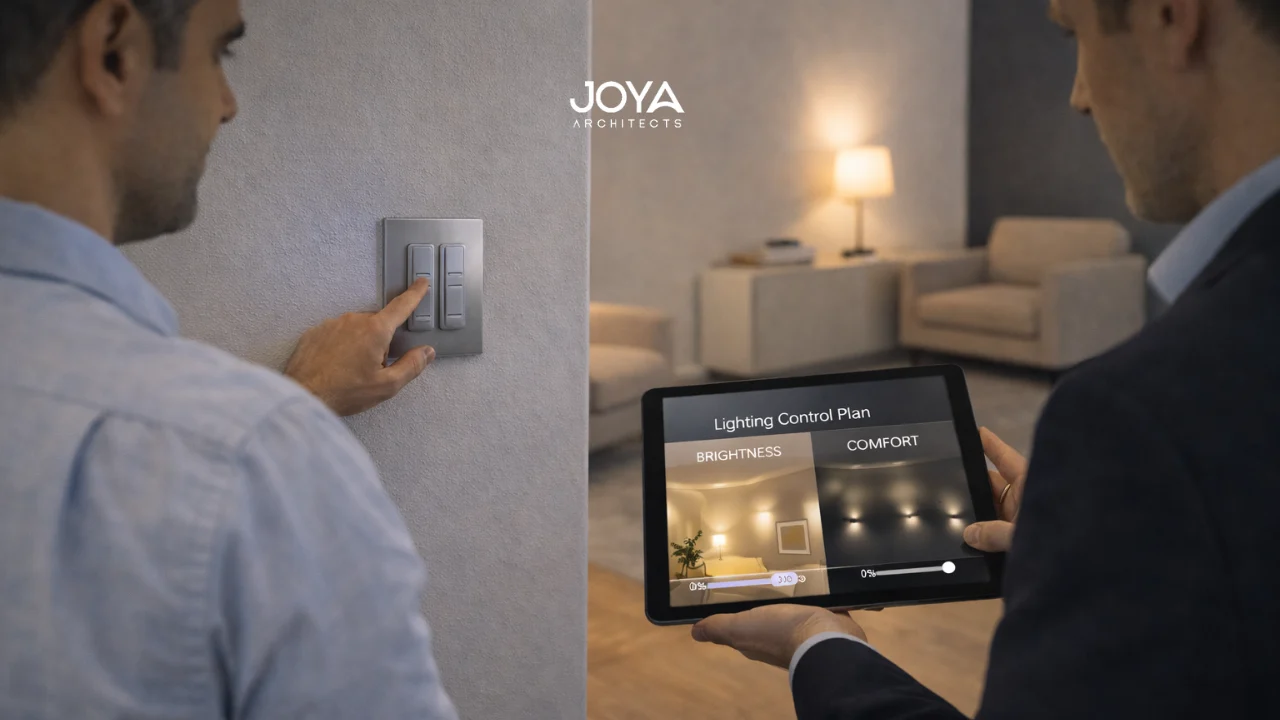
Dimmer switches are often perceived as minor electrical accessories. In architectural practice, however, they are powerful spatial control tools.
For homeowners and commercial clients in early research stages, understanding how to use dimmer switches effectively is less about convenience and more about environmental calibration. Dimming alters mood, energy consumption, visual comfort, and spatial hierarchy.
Lighting is not static. It responds to time of day, activity, and occupancy density.
Revisiting what is interior design reminds us that lighting is a foundational layer of spatial experience, not a decorative afterthought.
When integrated early within lighting strategy, dimmers enhance architecture. When added impulsively, they create flicker, inconsistency, or electrical inefficiency.
Not every light source benefits from dimming.
In residential interiors, dimmers are most effective for:
In commercial office interior design, dimmers can regulate:
However, task lighting in work-intensive environments may require stable illumination levels.
Understanding the 3 types of artificial lighting, ambient, task, and accent, helps determine where dimmers add value.
For example:
A homeowner may install dimmers on kitchen task lighting. If set too low, countertop visibility decreases, affecting safety. In contrast, dimming ambient living room lighting enhances evening comfort.
Similarly, in workplace design, overly dimmed desk areas can reduce productivity.
Exploring corporate office interior design illustrates how lighting layers must align with behavioral zoning.
Dimmers are tools, not universal upgrades.
The question is, are dimmer switches good and worth it? depends on design intention.
For homeowners, dimmers:
In minimalist interiors, subtle lighting shifts reinforce spatial calm. Reviewing minimalist architecture features demonstrates how concealed lighting combined with dimmers enhances material texture without visual noise.
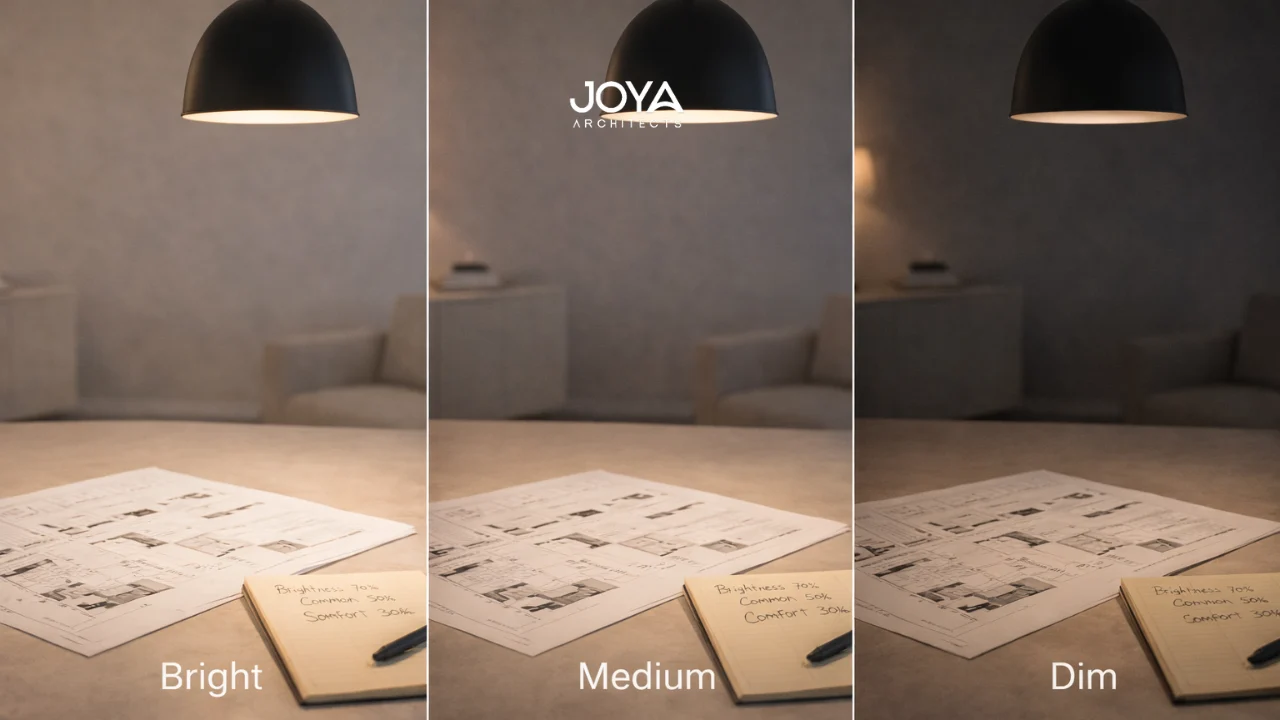
In commercial environments, dimmers contribute to:
However, commercial installations must consider electrical load distribution and compliance frameworks.
Our overview of interior design codes regulations explains how emergency lighting circuits typically cannot be placed on dimmers, as they must maintain consistent illumination.
Dimmers are valuable when integrated into lighting planning, not retrofitted randomly.
In early research stages, clients often overlook technical compatibility.
Common dimmer switch mistakes include:
Many LED bulbs require specific trailing-edge dimmers. Incompatible pairing causes flickering or buzzing.
Understanding the broader interior design process flow chart clarifies why lighting specifications must be finalized during design development, not post-installation.
Installing high-wattage loads beyond dimmer rating can cause overheating.
In commercial renovations, upgrading to new luminaires without recalculating circuit load can compromise system stability.
Dimming warm light deepens amber tones, while cool light may shift greenish when dimmed improperly.
Exploring how to mix warm and cool colors helps anticipate how dimming affects wall finishes and material perception.
Positioning dimmers inconsistently disrupts user experience. For example:
A commercial client may install dimmers only at reception but not in adjacent meeting rooms, creating visual imbalance.
Reviewing architectural planning room layouts reinforces that lighting control points should align with circulation flow.
Mistakes often arise from treating dimmers as hardware rather than design components.
For homeowners asking what do L1, L2, and C mean on a dimmer switch, these labels refer to wiring terminals:
In two-way configurations, two dimmers control the same lighting circuit, common in staircases or long corridors.
However, not all dimmers support two-way functionality.
Understanding whether you can use two dimmer switches requires professional electrical assessment. Incorrect wiring can damage circuits or create inconsistent dimming response.
In commercial office interior design, centralized lighting control systems often replace traditional two-way switches with digital management panels.
Lighting control must align with overall design strategy and building systems integration.
There are circumstances where dimmers are not advisable.
Certain fluorescent fixtures or non-dimmable LED panels cannot be dimmed without specialized drivers.
Emergency and exit lighting must maintain consistent brightness to comply with safety regulations.
In medical, laboratory, or high-detail commercial settings, consistent brightness may be required for safety and performance.
Understanding the key benefits of hiring an architect includes recognizing when aesthetic flexibility must yield to technical necessity.
In residential settings, dimmers should not compromise safety in staircases or bathrooms where clear visibility is essential.
Dimmers enhance flexibility, but must not reduce functional clarity.
Effective dimmer usage requires integration with:
In open-plan homes, zoning ambient lighting across separate circuits allows gradual evening transitions.
In commercial lobbies, dimming accent lighting during off-peak hours conserves energy while preserving brand presence.
Exploring commercial lobby design ideas reveals how lighting intensity shifts influence perception of space and prestige.
Similarly, understanding 7 essential elements of interior design clarifies how emphasis and balance are shaped through light modulation.
Dimmer switches are not decorative upgrades. They are dynamic spatial regulators.
How to use dimmer switches effectively requires more than installing adjustable knobs.
Dimmers influence:
For homeowners, they provide adaptable living environments.
For commercial clients, they enhance workplace flexibility and brand ambiance.
However, compatibility, circuit load, regulatory constraints, and lighting temperature must be evaluated early in the design process.
Lighting control is architectural control.
When integrated strategically, dimmers transform static illumination into responsive spatial experience.
If you are exploring how to use dimmer switches effectively within a residential or commercial project and would like clarity on how lighting control integrates with spatial planning, fixture selection, and regulatory compliance, our team at Joya Architects can guide you through a structured interior design approach.
Discover how our integrated interior design strategy transforms lighting systems into calibrated architectural environments.