



Walls form the visual backdrop of nearly every room in a home. While furniture and lighting define how a space functions, wall surfaces contribute significantly to the atmosphere and identity of the interior.
For homeowners exploring how to decorate a wall on a low budget, the key is not necessarily purchasing expensive artwork but understanding how wall elements interact with lighting, color palettes, and spatial layout.
Well-designed wall compositions often follow principles discussed in 7 essential elements of interior design, where balance, proportion, and rhythm shape how visual elements are perceived.
In contemporary residential design, wall art can include a wide range of elements, from framed artwork to architectural textures, decorative panels, or even curated everyday objects.
Below are several affordable wall art ideas that can enrich interior spaces while remaining budget-conscious.
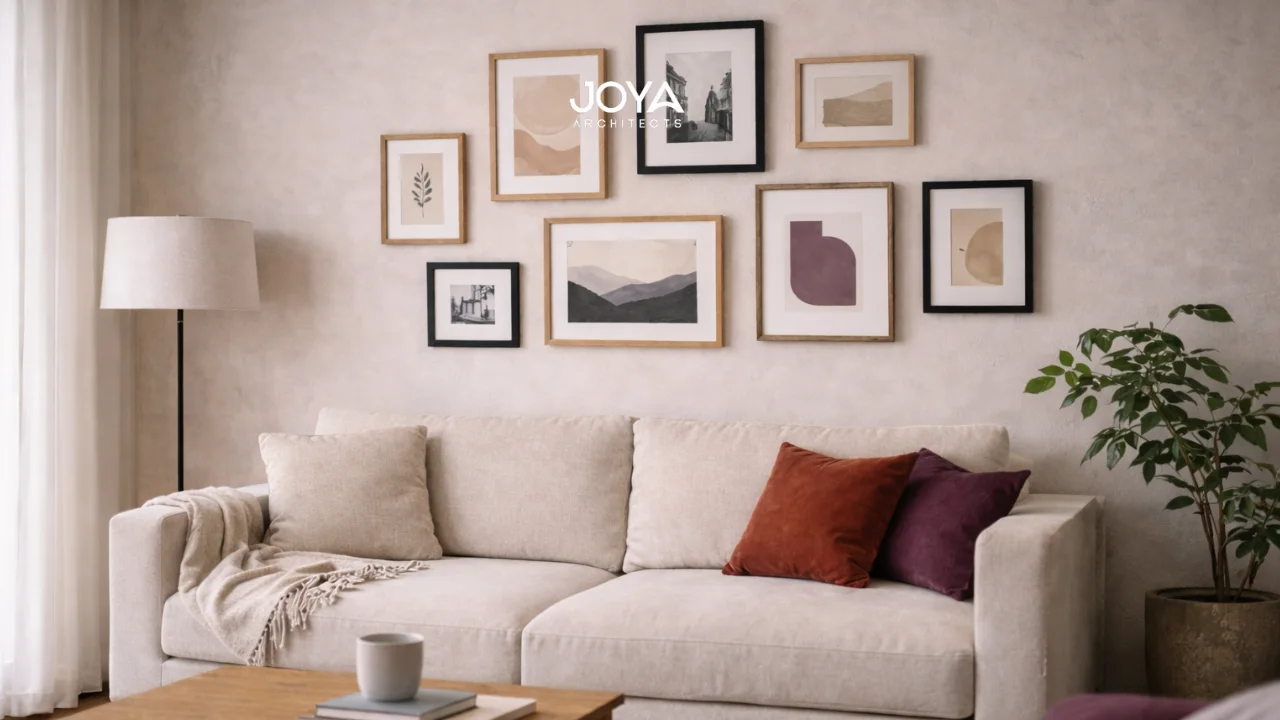
A gallery wall is one of the most effective ways to decorate a large wall without relying on a single expensive artwork.
Instead of purchasing a large painting, homeowners can assemble a curated collection of smaller frames containing:
When arranged thoughtfully, these elements create visual rhythm across the wall.
Designers often organize gallery compositions according to spatial planning strategies similar to those used in architectural planning room layouts, ensuring the artwork aligns with furniture placement and viewing angles.
For example, a gallery wall placed above a sofa should maintain consistent spacing and visual balance with the furniture below.
One of the cheapest ways to decorate walls is by printing digital artwork or photography and framing it simply.
Online art platforms provide high-resolution prints that can be displayed in affordable frames.
This approach allows homeowners to experiment with different themes such as:
These decorative elements often complement interiors designed around a minimalist color palette, where subtle graphics enhance the space without overwhelming it.
For example, a living room with neutral walls may feature simple black-and-white prints arranged symmetrically above a console table.
Wall shelves can function as both storage and wall art.
Instead of traditional framed artwork, homeowners may display:
These layered objects create visual depth and allow the wall composition to evolve over time.
In living rooms or small apartments, decorative shelving also supports spatial organization strategies discussed in furniture arrangement in small apartments, where vertical surfaces help maximize usable space.
A practical example illustrates this idea.
A homeowner living in a compact apartment may install floating shelves above a desk to display framed photos and small plants. The arrangement becomes a decorative feature while preserving floor space.
Paint is one of the most accessible ways to transform a wall without significant cost.
An accent wall introduces contrast and visual interest within a room. Homeowners exploring alternative wall art ideas often use paint patterns, color blocking, or geometric shapes.
Color strategies similar to those discussed in how to mix warm and cool colors can help ensure the accent wall complements the surrounding palette.
For instance, a soft terracotta accent wall in a neutral living room may introduce warmth while maintaining balance.
Accent walls can therefore function as architectural art rather than applied decoration.
Textiles can soften interior environments while introducing subtle patterns and textures.
Affordable textile options may include:
These materials work particularly well in bedrooms or relaxed living areas where softer textures enhance comfort.
Textile elements often complement interiors inspired by rustic bedroom design ideas, where natural fabrics and handcrafted details create warm and inviting environments.
A homeowner example demonstrates this approach.
A homeowner decorating a bedroom may hang a woven textile above the headboard instead of purchasing large framed artwork. The fabric introduces warmth while maintaining a relaxed atmosphere.
Wall decals are one of the simplest ways to add personality to a space without permanent modifications.
These removable decorative elements are particularly useful for renters or homeowners experimenting with new interior ideas.
Examples include:
Many homeowners exploring cheap wall decor ideas use decals to highlight specific zones within a room, such as reading corners or workspace areas.
Decorative ideas such as those explored in wall sticker decor ideas demonstrate how simple graphic elements can transform blank walls quickly.
One of the most creative alternative wall art ideas involves displaying everyday objects in artistic arrangements.
Examples include:
When arranged intentionally, these objects create visual patterns that function as artwork.
This strategy works particularly well in interiors inspired by natural materials and design styles discussed in minimalist architecture features, where objects are chosen carefully rather than displayed in excess.
A homeowner scenario illustrates this approach.
A homeowner decorating a dining room wall may arrange several woven baskets in a circular pattern. The display becomes a sculptural wall feature without requiring expensive artwork.
Affordable wall art does not rely solely on inexpensive materials. The success of wall decoration often depends on how it integrates with the broader interior design strategy.
Architects typically consider:
For example, a gallery wall illuminated by warm lighting may appear more cohesive than artwork placed in poorly lit areas.
Understanding how decorative elements interact with interior lighting, such as those discussed in 3 types of artificial lighting, helps ensure wall features remain visually effective throughout the day.
Wall decoration therefore becomes part of a larger spatial composition rather than an isolated design decision.
Affordable wall art ideas demonstrate that meaningful interior design does not always require expensive artwork. Through thoughtful composition, materials, and lighting, homeowners can create expressive wall environments using accessible elements.
Gallery walls, framed prints, decorative shelving, textiles, and creative object displays all offer ways to introduce personality into interior spaces while remaining budget-conscious.
For homeowners exploring wall decoration during the design exploration stage, integrating these ideas within the broader spatial planning of the home ensures that decorative elements enhance rather than overwhelm the interior environment.
If you are exploring ways to personalize your home through wall art, color palettes, and interior styling, coordinating these elements with the overall architectural design can help create a cohesive living environment.
At Joya Architects, interior design is approached as part of a broader architectural strategy, ensuring that materials, spatial layout, and visual elements work together seamlessly.
Learn more about how our team approaches residential interior design and spatial planning through our residential interior design services.