



Bedrooms are among the most personal spaces within a home. They serve as environments for rest, privacy, and daily retreat from the more social areas of the house. Because of this intimate function, many homeowners look for interior styles that emphasize comfort and natural warmth.
Among the many interior directions available, rustic design offers a compelling approach. Inspired by rural architecture and traditional craftsmanship, rustic interiors celebrate materials in their natural state, exposed wood grain, textured fabrics, and earthy color palettes.
When homeowners explore rustic bedroom design ideas, the objective is not simply decorating a room with vintage accessories. Instead, rustic bedrooms rely on a thoughtful balance between material authenticity, spatial comfort, and lighting conditions.
Understanding 7 essential elements of interior design helps illustrate this balance. Proportion, texture, color harmony, and spatial rhythm all contribute to creating a bedroom that feels cohesive rather than overly themed.
For homeowners in the design exploration stage, rustic bedroom design can create an environment that feels timeless, relaxed, and closely connected to natural materials.
Before exploring specific rustic bedroom decor ideas, it is helpful to understand what makes a room rustic.
Rustic interiors typically emphasize natural materials and visible craftsmanship. Instead of polished surfaces or highly refined finishes, rustic rooms highlight textures that feel organic and authentic.
Common elements found in rustic bedrooms include:
These materials introduce visual depth and tactile warmth to the space.
Rustic bedrooms also benefit from thoughtful spatial planning. Furniture arrangements should allow the room to feel relaxed rather than crowded.
Architects often evaluate bedroom layouts using architectural planning room layouts, ensuring that circulation around the bed, storage areas, and seating elements remains comfortable.
A practical homeowner example illustrates this clearly.
A homeowner designing a rustic bedroom may initially consider multiple decorative wooden pieces. During the design process, the architect may recommend focusing on a few key furniture elements, such as a solid timber bed frame and a simple wooden bench.
By limiting the number of heavy materials, the room maintains warmth without becoming visually overwhelming.
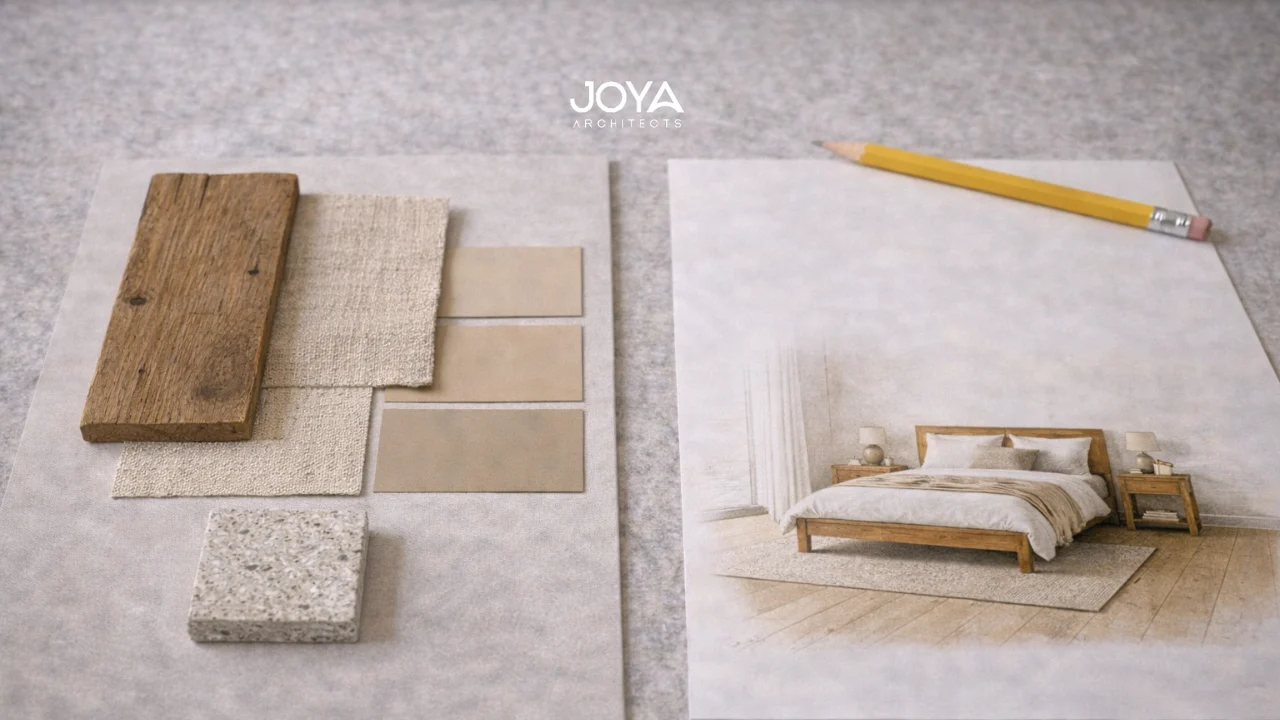
The defining characteristic of rustic room design ideas is the use of materials that express natural texture.
Wood is often the central material in rustic interiors. Reclaimed timber furniture, wooden headboards, and exposed ceiling beams create a sense of authenticity and connection to nature.
However, rustic interiors are rarely composed entirely of wood. Balancing natural materials with lighter surfaces helps maintain visual harmony.
This approach often aligns with principles found in minimalist architecture features, where restrained material palettes allow architectural elements to stand out clearly.
Lighting also contributes significantly to the atmosphere of rustic bedrooms.
Warm ambient lighting enhances the natural tones of wood and textiles. Understanding the 3 types of artificial lighting can help homeowners combine overhead lighting with bedside lamps and subtle accent illumination.
For example, a rustic bedroom may include pendant lights above bedside tables combined with soft wall lighting that highlights textured wall surfaces.
A practical homeowner scenario demonstrates this balance.
A homeowner designing a rustic bedroom may initially install several decorative lantern-style fixtures. An architect may recommend simplifying the lighting arrangement so that warm ambient lighting highlights the natural materials rather than competing with them.
The room feels calmer and more cohesive as a result.
Color selection plays an important role in rustic interiors.
Many homeowners researching how to make a bedroom look rustic focus primarily on furniture and materials, but color palettes are equally important.
Rustic bedrooms typically rely on earthy tones that reflect natural landscapes.
Common color combinations may include:
These tones create a comfortable and grounded atmosphere.
Interior designers often use principles such as the 60 30 10 rule for bedroom design to maintain balance within these palettes. According to this guideline, a room may use:
This approach ensures that rustic textures remain visually balanced rather than overwhelming the room.
Color strategies like these also connect with broader ideas explored in minimalist color palette, where restrained tones create calm interior environments.
A practical example illustrates this clearly.
A homeowner designing a rustic bedroom may combine warm white walls with a reclaimed wood bed frame and olive-toned bedding. A few darker accents, such as ceramic vases or metal fixtures, provide contrast without disrupting the calm palette.
The room feels layered yet harmonious.
Rustic design is often associated with countryside homes or mountain cabins. However, rustic bedrooms can also work effectively within contemporary houses when the materials are integrated thoughtfully.
Modern homes frequently combine rustic elements with cleaner architectural lines. This approach allows the warmth of natural materials to complement contemporary spatial planning.
For example, a minimalist home with neutral walls and large windows may incorporate rustic bedroom furniture to introduce texture and warmth.
These ideas often intersect with broader design strategies such as minimalist living room ideas, where restrained material palettes and thoughtful layouts shape calm interior environments.
A practical homeowner scenario illustrates this integration.
A homeowner planning a custom home may initially envision a fully rustic interior. During the design process, the architect may suggest blending rustic furniture with simpler wall finishes and modern lighting fixtures.
The result is a balanced interior where rustic materials provide warmth while the architecture maintains clarity.
This hybrid approach allows rustic design to feel contemporary rather than nostalgic.
Rustic bedroom design offers a warm and inviting approach to residential interiors by emphasizing natural materials, textured finishes, and balanced color palettes.
When applied thoughtfully, rustic interiors create bedrooms that feel calm, comfortable, and closely connected to natural materials.
For homeowners exploring rustic bedroom design ideas during the design exploration stage, the most effective approach is to integrate rustic elements with clear spatial planning and balanced lighting.
When rustic materials align with the architecture of the home, the result is a bedroom that feels timeless rather than overly themed.
If you are exploring rustic bedroom design ideas as part of a custom home or knockdown rebuild project, thoughtful coordination of materials, spatial layout, and lighting can help create a bedroom that feels warm, balanced, and enduring.
At Joya Architects, interior environments are developed alongside architectural planning so that material choices and spatial design work together seamlessly.
Learn more about how our team approaches residential interior design and spatial planning through our residential interior design services.