



Lighting is more than a functional necessity in residential design. It shapes how materials appear, how spaces are perceived, and how comfortable a room feels throughout the day.
For homeowners exploring light fixtures DIY, the objective is often to personalize interior spaces without undertaking major renovations. Decorative lighting can introduce character through materials, shapes, and creative placement.
However, effective lighting design requires balance. A well-lit interior typically combines different lighting layers, as explained in 3 types of artificial lighting, where ambient, task, and accent lighting work together to create comfortable environments.
DIY lighting projects can contribute to these layers while also reflecting personal style.
Below are several lighting fixture DIY ideas that homeowners can explore while maintaining a cohesive interior design approach.
Mason jar lighting fixtures have become a popular DIY solution because they combine affordability with rustic charm.
Glass jars can be suspended as pendant lights above:
The transparency of the glass allows the bulb to become a visual focal point.
These fixtures often work well in interiors inspired by rustic bedroom design ideas, where natural textures and handcrafted elements contribute to a relaxed atmosphere.
For example, a homeowner may suspend several mason jar pendants above a wooden dining table, creating a warm and inviting lighting feature.
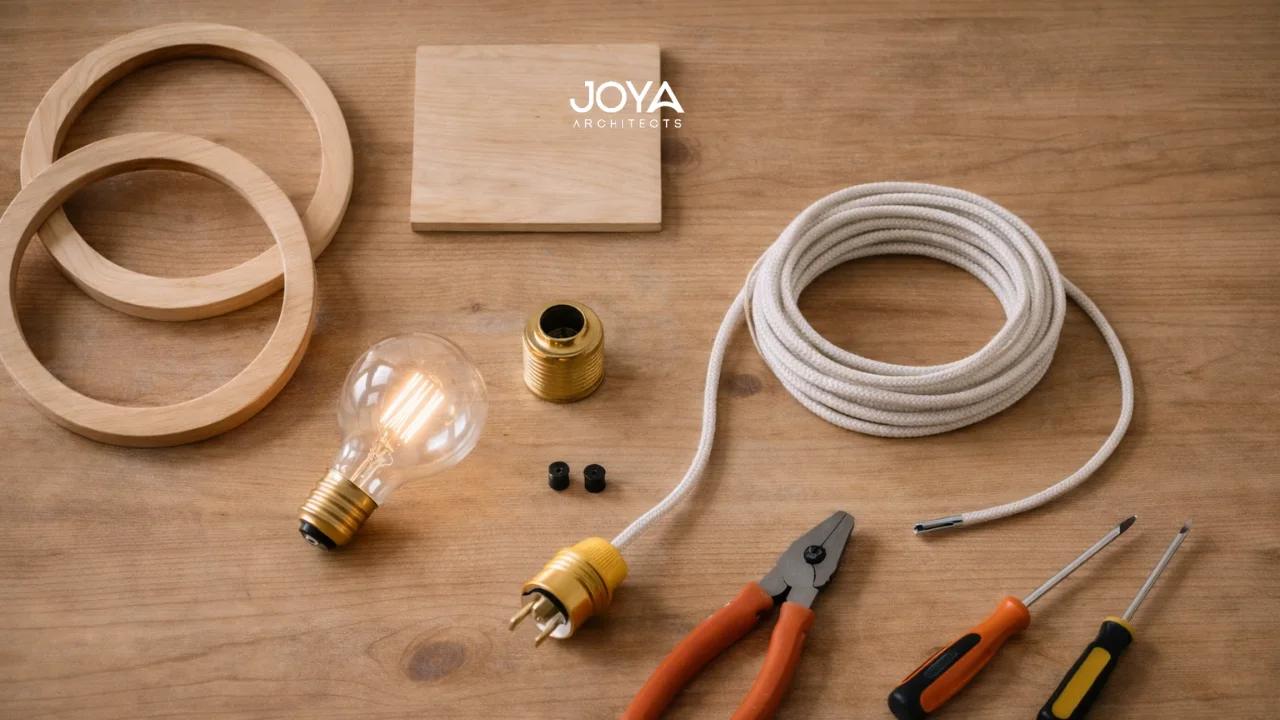
A simple wooden frame can be used to construct a geometric pendant light that feels modern and architectural.
This DIY project typically involves:
The wooden frame acts as a sculptural element surrounding the bulb.
Such lighting fixtures complement interiors influenced by minimalist architecture features, where materials and structure are visually expressed rather than hidden.
For instance, a living room with neutral walls and natural wood furniture may benefit from a simple wooden pendant light that echoes the room’s material palette.
DIY fixtures made from rope or exposed pipes can introduce an industrial character into interior spaces.
These materials are commonly used to create:
Industrial-inspired lighting often pairs well with interiors discussed in industrial furniture ideas, where raw materials and structural elements contribute to the overall design language.
A homeowner designing a loft-style living room might install pipe-based wall lights that complement exposed brick or metal furniture elements.
Paper lanterns offer one of the simplest and cheapest ways to create soft ambient lighting.
Because paper diffuses light gently, lantern fixtures are ideal for:
They provide warm illumination without strong glare.
These fixtures often complement calm interior palettes such as those explored in minimalist color palette, where restrained tones and soft lighting create relaxing environments.
For example, a homeowner may hang several paper lanterns at different heights in a reading area to produce a layered lighting effect.
Natural woven baskets can easily be converted into pendant lighting fixtures.
The woven texture creates patterned shadows that add visual interest to walls and ceilings.
Basket lighting fixtures are especially effective in interiors inspired by Scandinavian design trends, where natural materials and soft textures play a central role.
A homeowner designing a dining space may invert a woven basket and insert a pendant light socket, creating a warm and textured lighting feature.
Glass bottles can be repurposed as elegant pendant lights with minimal modification.
This approach often involves:
Colored bottles can create subtle lighting effects, especially when used in groups.
Bottle lighting works particularly well in creative dining spaces or home bars where decorative lighting contributes to the atmosphere.
These DIY approaches reflect broader principles discussed in how to decorate with minimalist style, where simple objects are repurposed thoughtfully rather than replaced with expensive décor.
LED strip lighting provides one of the most affordable ways to illuminate interior surfaces.
Unlike traditional fixtures, LED strips can be installed behind:
This creates soft indirect lighting that highlights architectural features.
Understanding how to use dimmer switches effectively can further enhance these lighting installations by allowing homeowners to adjust brightness according to the time of day.
For example, a homeowner may install LED strips behind a living room bookshelf to create a subtle evening lighting atmosphere.
While DIY lighting can introduce creative character to interior spaces, it should still be considered within the broader lighting strategy of the home.
Architects typically design lighting systems to ensure that each room provides:
DIY fixtures can complement these systems when integrated thoughtfully.
For instance, decorative pendant lights above a dining table may serve as accent lighting, while recessed ceiling lights provide overall illumination.
By understanding how lighting layers interact, homeowners can experiment with DIY fixtures without compromising visual comfort.
Lighting fixture DIY ideas demonstrate that creative lighting does not always require expensive designer products. Through simple materials such as glass jars, wooden frames, baskets, or recycled bottles, homeowners can introduce distinctive lighting features into their interiors.
However, successful lighting design involves more than aesthetics. It requires thoughtful coordination between light intensity, fixture placement, and the overall interior composition of the room.
For homeowners exploring lighting ideas during the design exploration stage, combining DIY creativity with architectural lighting principles can result in interiors that feel both expressive and comfortable.
If you are exploring creative lighting ideas as part of a custom home or knockdown rebuild project, integrating lighting design early in the architectural planning process can help ensure that functionality, atmosphere, and aesthetics work together seamlessly.
At Joya Architects, lighting strategies are developed alongside spatial planning and material selection to create balanced and enduring interior environments.
Learn more about how our team approaches residential interior design and spatial planning through our residential interior design services.