



Color plays an important role in shaping the emotional atmosphere of interior spaces. While architectural layout establishes spatial relationships, color palettes influence how those spaces are perceived and experienced.
Violet tones, ranging from soft lavender to deep plum, can introduce sophistication and creative energy into residential interiors. For homeowners exploring violet interior design, the challenge lies in integrating the color in a way that complements the broader material palette of the home.
Architects often approach color selection as part of a larger spatial strategy. Color interacts with light, surface materials, and furniture placement, shaping the visual rhythm of the room.
Understanding 7 essential elements of interior design helps clarify how color relationships influence harmony and proportion in interior spaces.
For homeowners planning custom homes or knockdown rebuild projects, violet can be introduced thoughtfully to create interiors that feel distinctive yet balanced.
Many homeowners exploring how to use purple in interior design are curious about the symbolic and emotional qualities associated with the color.
Historically, violet and purple tones have been associated with creativity, introspection, and quiet luxury. Because violet lies between warm and cool tones on the color spectrum, it can adapt to a wide range of interior palettes.
Homeowners often ask what purple symbolizes in design. In interior environments, violet can represent:
The psychological character of violet depends heavily on its shade.
Lighter tones such as lavender or lilac often feel soft and calming. Deeper tones such as plum or aubergine create dramatic accents and visual depth.
Architects often evaluate color placement within a room using architectural planning room layouts, ensuring that accent colors support spatial composition rather than dominating it.
For example, a homeowner designing a living room may initially consider painting multiple walls violet. During design exploration, an architect may recommend using the color on a single accent surface or through furniture and textiles instead.
This strategy introduces color while maintaining spatial clarity.
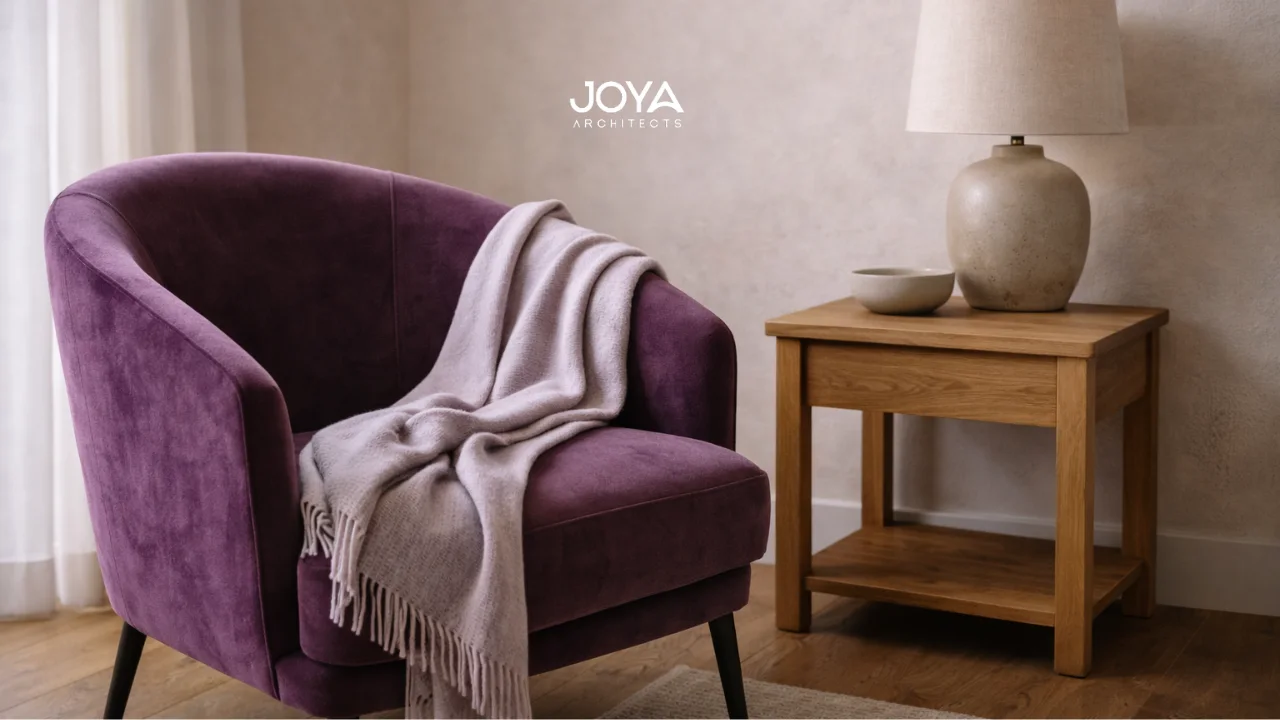
When exploring violet interior palettes, material selection plays a critical role.
Violet works particularly well when paired with natural materials that soften its intensity. These materials often include:
These combinations help violet feel grounded within the interior environment.
For example, a soft violet wall color combined with oak furniture and beige textiles can create a balanced and sophisticated living room.
This approach often aligns with strategies used in minimalist color palette, where accent colors are layered onto neutral foundations rather than dominating the space.
Lighting also influences how violet appears in interiors.
Understanding the 3 types of artificial lighting helps homeowners evaluate how ambient and accent lighting affect color perception.
Warm lighting can deepen violet tones, creating a cozy atmosphere. Cooler lighting may shift violet toward bluish hues.
A practical homeowner example illustrates this interaction.
A homeowner may initially select a rich plum color for a bedroom accent wall. Under cooler lighting, the wall might appear darker than expected. By adjusting lighting temperature or softening the surrounding palette, the color becomes more balanced.
Material and lighting coordination therefore play an essential role in successful violet interiors.
In most residential interiors, violet works best as an accent color rather than a dominant palette.
Accent applications may include:
These accents allow violet to introduce personality without overwhelming the room.
Color planning strategies often follow proportional guidelines similar to those explored in how to mix warm and cool colors, where balanced color relationships create visual harmony.
For example, a neutral living room with beige walls and light wood flooring may incorporate a violet accent chair or artwork piece.
The accent introduces visual contrast while maintaining overall balance.
A practical homeowner scenario demonstrates this approach.
A homeowner designing a modern living room may initially choose violet walls throughout the space. During the design process, the architect may suggest retaining neutral walls and introducing violet through furniture and textiles instead.
The result is a room that feels expressive yet refined.
Accent-based color strategies often create more flexible interiors because decorative elements can evolve over time.
Violet can complement a variety of interior styles when used thoughtfully.
For example, minimalist interiors often rely on restrained palettes where accent colors provide subtle visual interest. In such spaces, violet can serve as a refined focal point.
Design strategies found in minimalist living room ideas frequently demonstrate how accent colors can enhance otherwise neutral environments.
Similarly, contemporary interiors that combine natural materials with modern furniture can incorporate violet through textiles or artwork.
A practical homeowner example illustrates this balance.
A homeowner designing a contemporary living room may choose neutral walls, oak flooring, and simple furniture forms. By introducing violet accents through a rug or decorative cushions, the space gains depth and character without disrupting its calm atmosphere.
Architects often recommend introducing stronger colors gradually, allowing homeowners to evaluate how they interact with the broader design palette.
This incremental approach ensures that accent colors support the architectural composition of the space.
Violet offers a distinctive and expressive color option for residential interiors. When applied thoughtfully, it can introduce sophistication, creativity, and subtle visual depth.
Successful violet interiors rely on careful coordination between color placement, material selection, and lighting conditions. Rather than dominating the space, violet works best when layered into a balanced palette of natural materials and neutral tones.
For homeowners exploring how to use violet in home design during the design exploration stage, integrating color decisions with spatial planning ensures that the interior remains cohesive and timeless.
When approached strategically, violet becomes a powerful accent that enriches the character of the home.
If you are exploring color strategies and interior design ideas as part of a custom home or knockdown rebuild project, thoughtful coordination of color palettes, materials, and spatial planning can help create interiors that feel balanced and expressive.
At Joya Architects, interior environments are developed alongside architectural planning to ensure that color, lighting, and materials work together harmoniously.
Learn more about how our team approaches residential interior design and spatial planning through our residential interior design services.