Joya Architects » Blogs » Why Landed-Specialist Experience Matters When Choosing an Architect
Architectural Process Guides
Why Landed-Specialist Experience Matters When Choosing an Architect
By achmad
2026-10-15 11:46:18
Landed-specialist experience matters because a house project combines site planning, neighbouring properties, structure, climate and household routines within one brief. An architect familiar with comparable work can explain those interactions and identify what still needs investigation. The useful test is relevant experience supported by evidence, rather than a specialist label alone.
Why official guidance makes site familiarity valuable
URA’s bungalow development-control handbook explains that its guidelines cannot cover every site condition or design and that individual proposals may require specific consideration. That is a useful reminder that an earlier approval does not establish what another plot can accommodate.
Experience helps frame an investigation; current information determines its conclusions. A credible architect should distinguish what appears likely from what needs a survey, specialist review or authority clarification. Familiarity is valuable when it makes uncertainty explicit, not when it encourages promises before the site is understood.
What landed-specialist experience should demonstrate
Understanding of the same kind of constraint
An inter-terrace home, a corner plot and a detached house present different relationships to light, access and neighbours. Look for work involving conditions comparable to yours. Similarity of frontage, depth, level changes or retained structure may be more useful than a matching architectural style.
Ask the architect to identify the two or three conditions that drove a previous design. Then ask what information established those conditions. The answer should connect a survey, brief or technical assessment to a design decision, rather than present the finished image as self-explanatory.
Experience across the service you are appointing
Concept design, authority submissions, tender documentation and construction-stage services involve different tasks. If you are appointing a team through completion, establish which stages it handled on the examples shown. A strong concept portfolio is relevant, but it does not alone demonstrate the proposed construction-stage service.
For retained buildings, ask how the team assessed existing information and responded to discoveries. For a new build, discuss how architecture, structure and services were coordinated. The objective is to understand a repeatable working method, not to find an earlier house that can simply be copied.
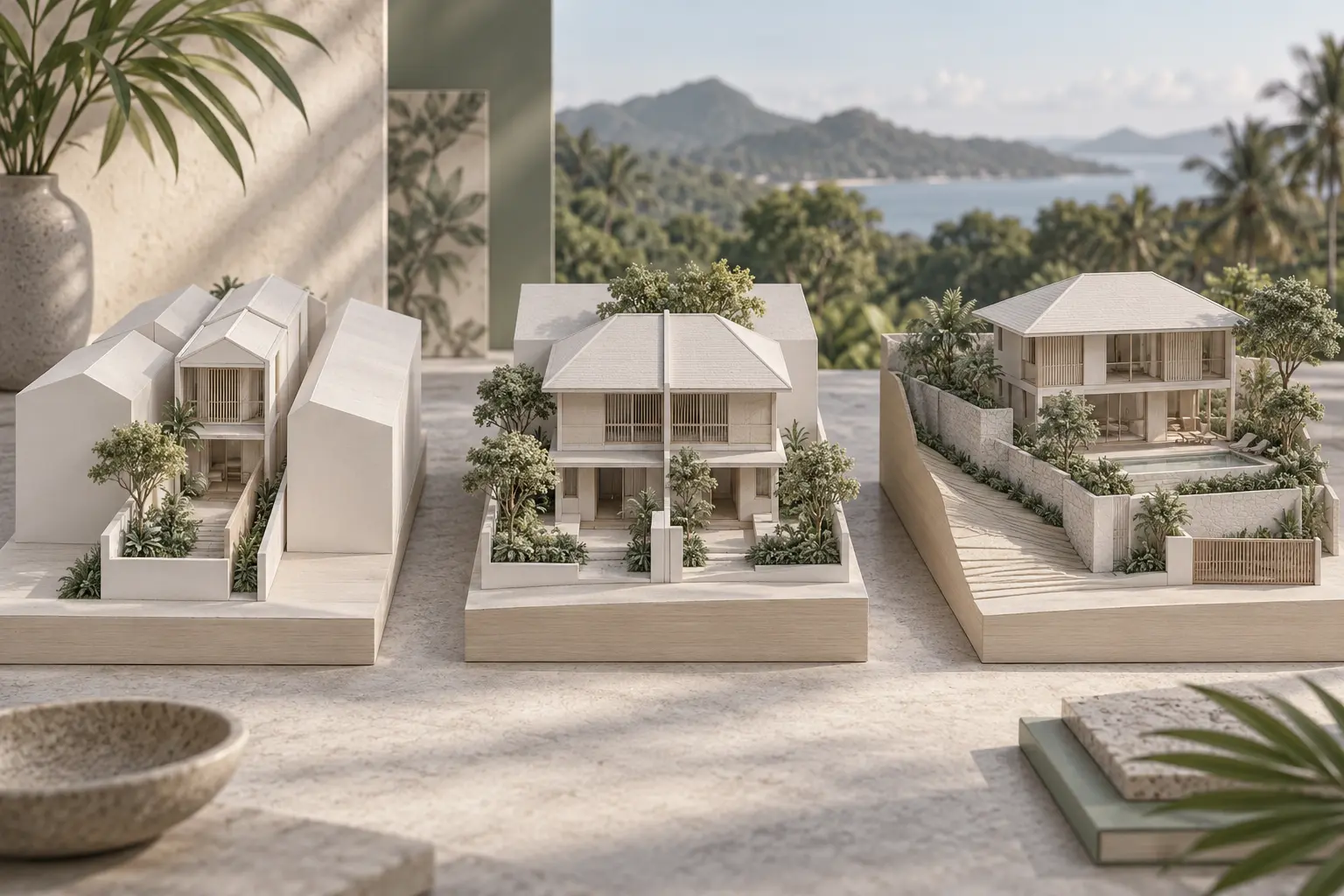
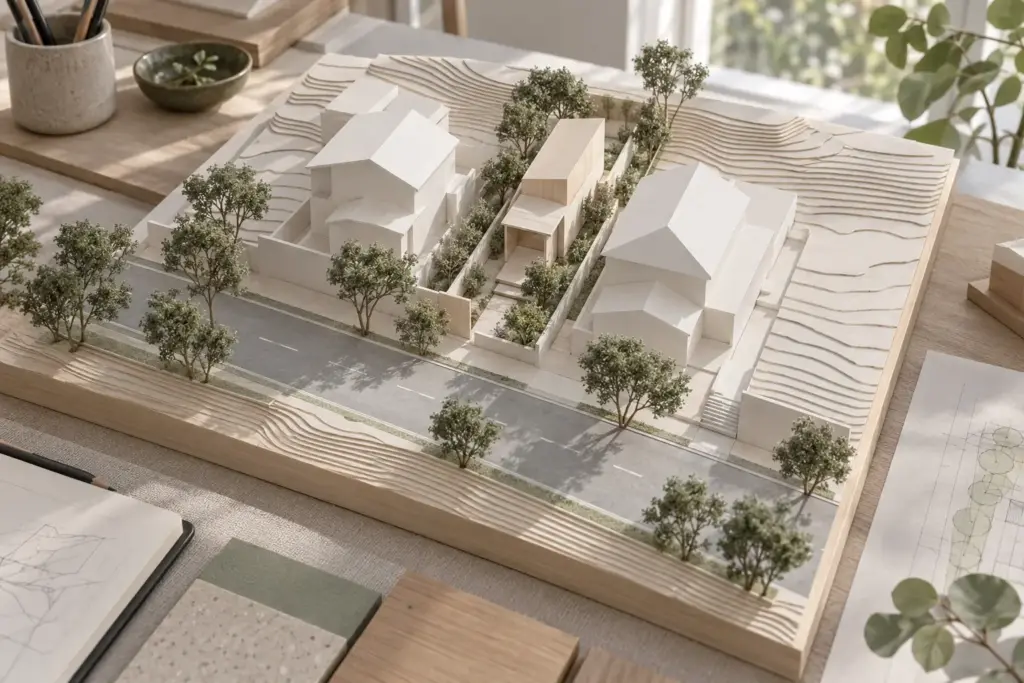
AI-generated conceptual illustration, not to scale; not an approved plan or completed Joya project.
Your landed home, your next step
Looking for an architect for your landed home?
Explore Joya’s principal-led approach to Singapore landed-home projects, from the first design discussions through submissions and construction.
Joya’s The Lightwell House, an inter-terrace home on Swanage Road, provides a specific starting point. Its published project description identifies skylights and a central staircase as elements of the daylight strategy. Those documented features can anchor a discussion about light in a constrained house.
Ask how a comparable idea would respond to your orientation, neighbouring buildings and household needs. The portfolio page does not, by itself, establish measured thermal performance, construction cost or approval conditions. Keep the evidence within what is documented and request further project information where it is relevant and available.
This approach makes portfolio proof useful without turning it into a universal promise. A completed feature demonstrates that a particular design was realised. Suitability for a different site still requires analysis, and any claimed performance should be supported by evidence appropriate to that claim.
Evaluate the team behind the experience
Ask who led the comparable project, who prepared the detailed information and who dealt with construction questions. Confirm which of those people would be involved in your appointment. A practice’s collective history matters, but day-to-day delivery depends on the team assigned and the support available to it.
Specialist experience should also include knowing when another discipline is needed. Structural, building-services, surveying and other inputs depend on the project. An architect who explains those boundaries gives you a clearer basis for planning appointments than one who treats every question as already settled.
Continuity deserves a practical answer. Ask how records are maintained, how design decisions are handed over and who covers an absence. These arrangements protect the usefulness of experience by making project knowledge available to the people doing the work.
Compare specialists without narrowing your choices too far
A practice does not need an identical past project to be suitable. Strong transferable experience, an appropriate consultant team and a careful investigation plan may be persuasive. Conversely, many superficially similar houses do not prove thoughtful design or dependable communication.
Use the broader criteria for choosing the right architect alongside your review of specialist relevance. The strategic guide to appointing an architect for a landed house helps connect that choice to the project’s overall needs.
Prepare consistent questions before appointment and use a structured method to read each architect’s portfolio. Record the scope, constraint, named team member and evidence for each relevant example. This is a stronger comparison than counting projects or relying on a single impressive photograph.
Ask for relevance, not reassurance
Before making an appointment, request an explanation of how the proposed team would investigate your most important site question. Look for a clear next step, its purpose and the information it requires. Discuss your landed property with Joya to explore the brief, relevant experience and appropriate scope of work.
Frequently Asked Questions
Is landed specialist a separate professional licence?
Treat the phrase as a description of relevant experience, not a substitute for checking professional credentials. Verify the architect’s registration and practising status independently, then assess comparable projects and the proposed team. Ask the practice to explain exactly what its claimed specialism covers and what evidence supports it.
Must an architect have designed my exact house type?
Not necessarily. Comparable constraints and relevant delivery experience may be more useful than an identical label. Ask how the team would address your site’s particular risks and what additional expertise it would appoint. Judge the reasoning, evidence and investigation plan together rather than relying on one portfolio category.
Does specialist experience guarantee planning approval?
No. Approval depends on the proposal, applicable requirements and the authority’s assessment. Experience can help the team identify likely issues and prepare the necessary information, but it cannot replace current checks. Ask which assumptions remain open and how they will be confirmed before you commit to detailed decisions.
How many previous landed projects should I expect?
There is no single project count that establishes suitability for every appointment. Consider the complexity and stages handled, the role of the proposed team and the relevance of completed work. A detailed discussion of a few comparable projects can reveal more than a long list with limited supporting information.
Your landed home, your next step
Start a conversation about your landed home
Share your property type, project priorities and where you are in the planning process. Discuss your next steps with Joya.