Joya Architects » Blogs » How to Read an Architect’s Portfolio for a Landed Home
Architectural Process Guides
How to Read an Architect’s Portfolio for a Landed Home
By achmad
2026-10-14 19:16:59
To read an architect’s portfolio, examine how the work responds to a brief and site, not only whether you like the photographs. For a landed home, plans, sections and an explanation of key decisions help reveal the thinking behind the finished spaces.
A portfolio is a selected presentation, so it cannot answer every question about delivery or performance. Use it to identify promising evidence and form focused questions for the practice before making an appointment.
Why design evaluation goes beyond appearance
The President’s Design Award judging-process description includes interviews and/or site visits after shortlisting. Its broader approach illustrates the value of examining a project beyond its initial presentation, rather than treating images alone as complete evidence.
Homeowners do not need to reproduce an awards assessment. The practical lesson is to ask for the reasoning, context and evidence behind a design claim. Recognition can prompt a closer look, but suitability for your household still needs its own assessment.
Read an architect’s portfolio through the original brief
Ask what the owner wanted, what the site made difficult and what the budget or programme constrained. A design response becomes easier to evaluate once you understand the problem it was intended to solve.
Look for relevance rather than identical styling. A project that handles overlooked neighbours or an awkward retained structure may offer useful evidence for your home even if its material palette is different.
For example, two houses can both include a courtyard while serving different purposes. One may use it to bring light into a deep plan; another may organise family privacy around it. Ask why that move was chosen and what trade-offs it introduced.
Establish what you are looking at
Completed work, proposal or visualisation?
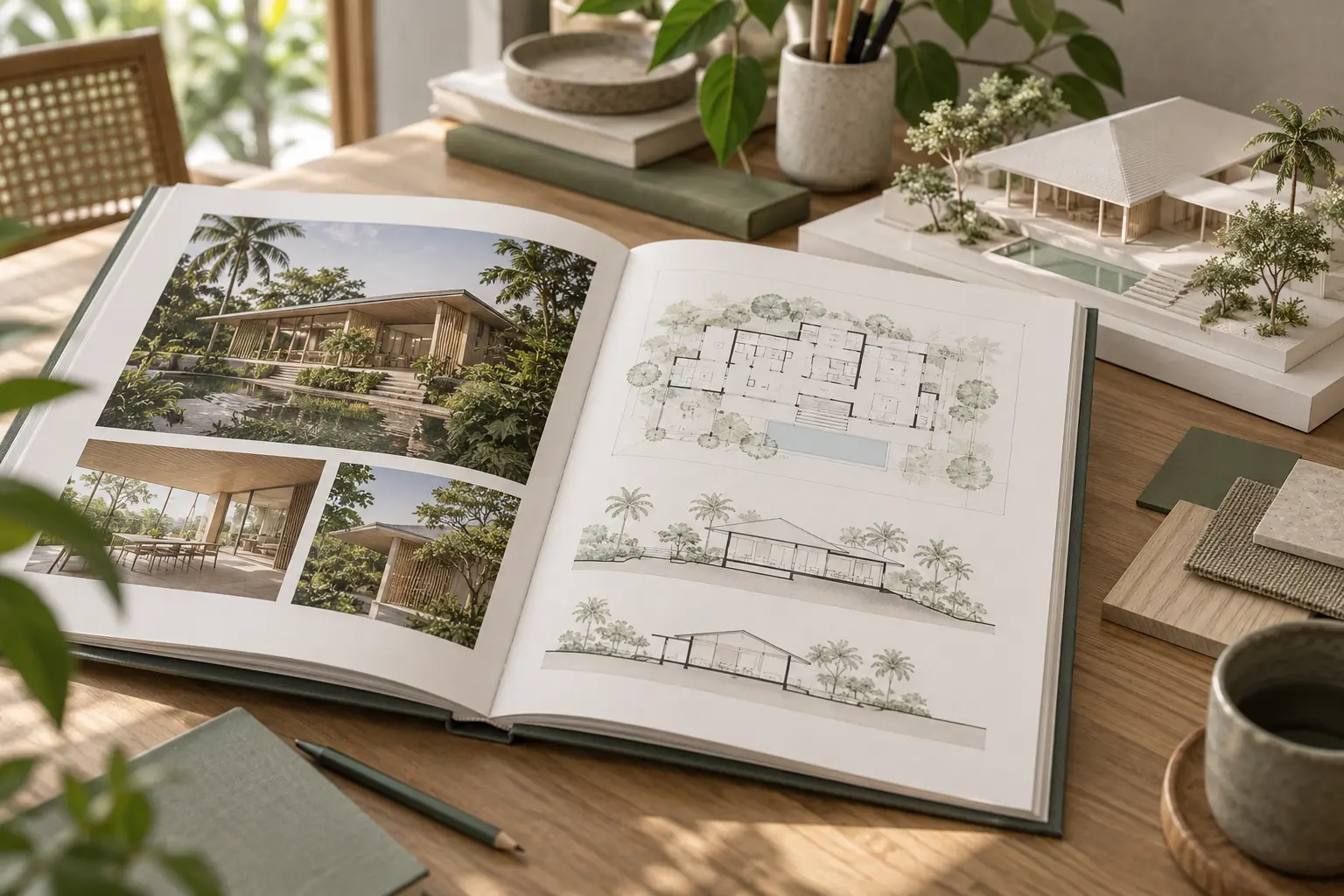
Identify whether the images show a built project, a construction stage, an unbuilt concept or a computer-generated view. Each can demonstrate something useful, but they provide different evidence. A concept can show exploration without demonstrating construction delivery.
Ask when the project was completed and whether later photographs or feedback are available with the owner’s consent. Recent completion images may not show how materials, landscaping and everyday use develop over time.
What was the practice’s role?
Confirm whether the firm designed the whole building, provided selected stages, collaborated with another practice or contributed a specialist package. Ask which proposed team members worked on the example and what they actually did.
The portfolio review should also test the practice's landed-specialist experience, including the constraints it has handled on comparable properties.
Shared authorship is normal and can be valuable. Clear attribution helps you assess the relevant experience without assuming that every person presenting the project was responsible for every part of it.
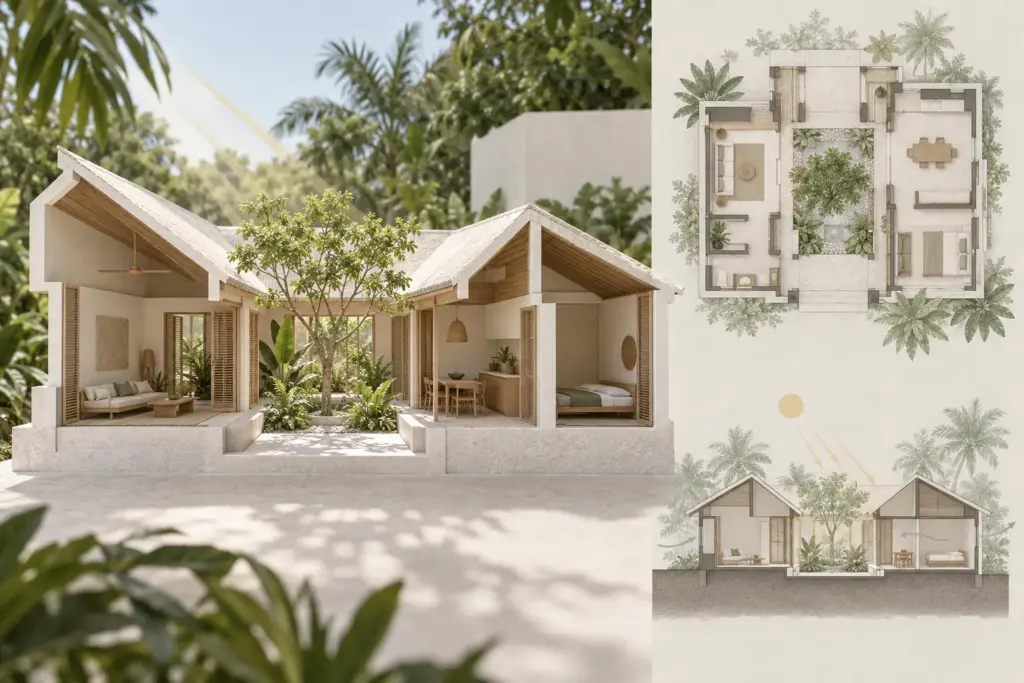
AI-generated conceptual illustration, not to scale; not an approved plan or completed Joya project.
Your landed home, your next step
Looking for an architect for your landed home?
Explore Joya’s principal-led approach to Singapore landed-home projects, from the first design discussions through submissions and construction.
Follow a normal day through the plan: arriving home, carrying groceries, preparing food, doing laundry and moving between private and shared rooms. Ask where storage, service areas and circulation sit. These spaces may be absent from the headline photographs.
A section helps explain relationships that a plan cannot show easily, including changes in level, ceiling heights and connections between floors. Ask the architect to explain it in plain language rather than pretending that every symbol is immediately clear.
Consider how the house would work for the people in your household. A dramatic stair or open living arrangement may suit one family and create practical concerns for another. Evaluate the response to the original users before deciding whether its principles transfer to you.
Ask about climate, privacy and maintenance
Look for the reasoning behind openings, shading and outdoor spaces. Ask how the design addresses sun exposure, rain and the relationship to neighbours. A bright photograph is not enough to establish comfort throughout the day.
Where the practice describes natural ventilation or reduced heat gain, ask what supports the claim: design analysis, observations, measurements or an intended strategy. Distinguish evidence of performance from an aspiration in the project description.
Discuss maintenance access and material choices. Ask how gutters, glazing, planted areas and equipment can be reached and maintained. An attractive detail should also be understandable as part of a home that will be occupied and cared for.
Examine a decision, not just the result
Choose one feature and ask what alternatives were considered. The answer can reveal how the architect balances space, cost, buildability and family priorities. A clear explanation of a compromise often tells you more than an uninterrupted list of successes.
If a site visit is offered, respect the resident’s privacy and agreed access. Ask practical questions through the host rather than inspecting a private home as though it were a public showroom. References and visits should be arranged with consent.
Keep notes separating what you saw, what the architect explained and what remains unverified. This prevents an impression from hardening into a conclusion without evidence.
Turn portfolio evidence into appointment questions
Use the architect selection guide to place portfolio review alongside scope, communication and availability. The companion questions to ask before appointing an architect helps turn promising examples into a concrete discussion.
Compare a small number of relevant projects using the same headings: brief, constraints, role, design response and available evidence. You are looking for a practice whose reasoning and working approach fit your needs, not collecting the largest number of attractive images.
Discuss portfolio examples with Joya alongside your own site and household priorities. Ask which decisions from the examples are relevant and which would need a different response for your home.
Frequently Asked Questions
Are finished photographs enough to judge an architect?
Photographs help show spatial character and materials, but they provide only selected views. Ask for plans, sections and an explanation of the brief and constraints. Combine that evidence with information about the firm’s role, proposed team and services before using the portfolio to inform an appointment.
Should I choose a portfolio that matches my preferred style?
Visual compatibility can matter, but also examine how the practice solves problems relevant to your site and household. Ask whether the design language follows the client’s brief or a repeated template. Similar finishes alone do not establish suitable planning, communication or delivery capability for your project.
Does an unbuilt concept have value in a portfolio?
Yes. It can demonstrate design exploration and communication, provided its status is clear. It does not offer the same evidence of construction delivery or occupied performance as a completed project. Ask for built examples as well where experience carrying work through construction matters to your appointment.
What should I ask about a project with several designers?
Ask which parts of the work the practice and proposed team members were responsible for, and how collaboration was organised. Clear attribution lets you assess relevant experience fairly. A shared project can be strong evidence when the contribution is explained rather than implied through presentation alone.
Your landed home, your next step
Start a conversation about your landed home
Share your property type, project priorities and where you are in the planning process. Discuss your next steps with Joya.