



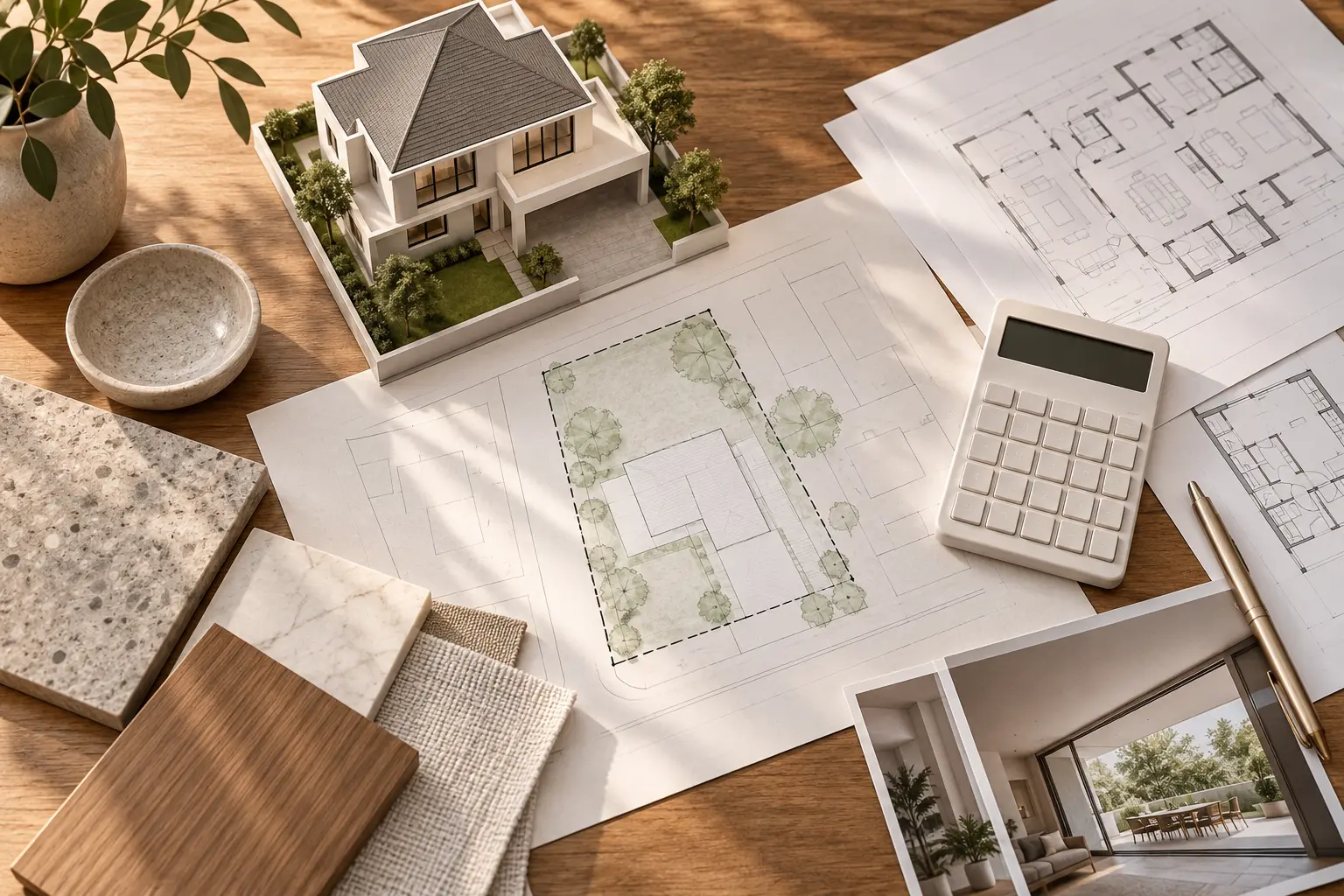
A landed home cost breakdown should account for property acquisition, design and investigations, construction, professional and authority fees, owner purchases and contingency. In Singapore, the builder’s quotation alone does not establish the total amount a household needs to acquire, deliver and move into a completed home.
The useful distinction is between a project cost plan and a construction price. The former describes the owner’s whole commitment; the latter prices a defined package of work. Keep both, and make their boundaries explicit before comparing proposals or deciding what can be afforded.
IRAS states that Singapore’s current GST rate is 9%. Where a GST-registered supplier’s taxable quotation excludes GST, a S$100,000 item therefore requires S$109,000 including GST. That arithmetic illustrates why the tax basis belongs beside each allowance.
Do not apply a blanket percentage to every entry. Land transactions and different charges require their own treatment, and a supplier may already have included tax. Ask for a consistent presentation showing the base amount, applicable tax and the amount payable.
If purchasing, record the property price separately from the redevelopment budget. Add legal and other transaction expenses, then obtain advice on applicable duties. IRAS explains property stamp-duty rates; the amount depends on the transaction and, for some duties, the buyer’s circumstances.
If the property is already owned, distinguish its value from the new expenditure required. This avoids comparing an existing owner’s rebuild budget with a purchaser’s acquisition-and-build total. Financing arrangements and available cash should also be reviewed with the relevant advisers.
List the architectural appointment, relevant engineering services, surveys and investigations individually. Include other specialists where the scope requires them. Confirm whether each fee covers the intended stages and whether third-party expenses or further investigations sit outside the quoted amount.
A useful check is whether the same service appears twice. A consultant fee proposal and a builder’s package may both describe coordination, but the deliverables can differ. Ask who prepares the information, who checks it and who remains responsible through construction.
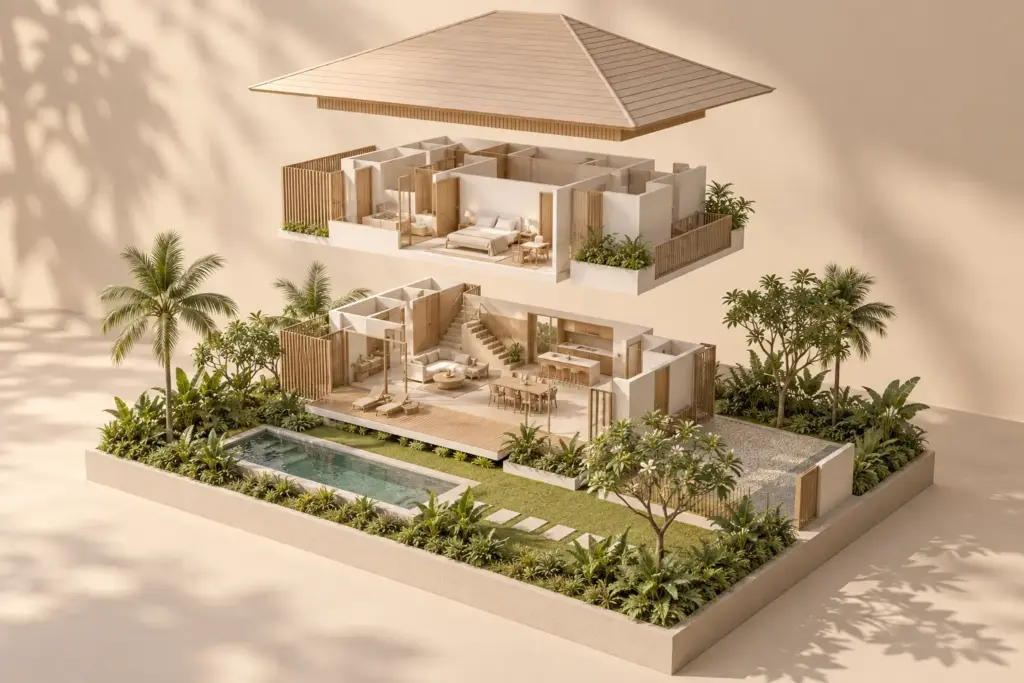
Record demolition and enabling works, the main structure, roof and facade, building services, internal finishes and external works. Check where drainage, boundary work, landscape, lifts or pools sit. They may be included in the main contract, separately procured or excluded entirely.
The overview of what a landed project costs to build provides the parent topic. This breakdown adds an ownership test: every required item needs a named budget line and a clear payer, even when it sits outside construction.
Authority charges are distinct from the professional work involved in preparing and coordinating submissions. Ask the team to identify applicable charges using the intended application route. Avoid assuming a consultant’s submission service includes every payment to an authority or third party.
Owner purchases can include loose furniture, appliances, window treatments and technology, depending on the contract scope. Temporary accommodation, storage and moving costs also need a place. A finished building and a fully equipped home are different budget milestones.
Keep contingency visible as an allowance for identified uncertainty. A provisional sum inside a contract already covers a specified allowance; it should not disappear from the cost plan when a separate contingency is added. Explain what each allowance addresses and how it will be updated.
Before ranking contractors, put the quotations on the same scope and tax basis. The following is a comparison method, not a market-rate schedule. Fill each row from the actual tender documents and record the source of any adjustment.
| Budget question | What to record |
|---|---|
| Is the work included? | Contract item, exclusion or owner purchase |
| Is the price settled? | Fixed amount, allowance or unpriced scope |
| Is tax included? | Tax basis and total payable |
| Could it change? | Assumption, next check and responsible person |
For illustration, a S$1.20 million offer excluding S$120,000 of required work compares with S$1.32 million before other adjustments. A S$1.28 million offer including the same work would then be lower on that basis. These hypothetical figures demonstrate reconciliation, not expected landed-house prices.
A larger area, more complex structure or changed specification should produce a visible revision to the forecast. Read about factors affecting landed construction costs before treating every increase as a pricing problem. Sometimes the scope being priced has changed.
The redevelopment route needs the same discipline. The existing A&A versus reconstruction cost comparison covers two routes; a new-erection option needs its own assessment. Do not compare proposals that retain different amounts of the existing building as though they describe identical work.
Track amounts already committed, forecast remaining work, approved changes and remaining risk allowances. The original budget alone cannot tell you whether the project is still affordable. Update the forecast when scope, procurement or site information changes materially.
Bring your quotation, fee proposals and exclusions to Joya Architects for a project discussion. Ask which budget lines remain uncertain and what would make them firmer. A clear breakdown gives you specific decisions to make before money is committed.
Usually the construction quotation prices specified building works rather than property acquisition. Check the actual contract scope. Keep the purchase price, transaction costs and redevelopment costs in separate sections of your owner-level budget so a building-only figure is not mistaken for the total financial commitment.
No. Professional fees pay for agreed services, such as design, engineering and submission preparation. Authority charges are payments associated with applicable applications or processes. Ask the consultant to distinguish their service fee from disbursements and third-party charges, and confirm which amounts are included in the proposal.
Set contingency with the project team according to the design stage and unresolved risks. A percentage without a stated basis can conceal uncertainty. Record what the allowance covers, avoid double counting contract allowances and review the remaining amount as investigations, design decisions and procurement clarify the scope.
A lower quotation may exclude required work, contain different allowances or use another tax basis. Reconcile all offers against the same drawings and scope before ranking them. The meaningful comparison is the forecast amount needed to deliver the agreed outcome, including costs paid outside the main contract.