Joya Architects » Blogs » First Architect Consultation: What Landed Homeowners Can Expect
Architectural Process Guides
First Architect Consultation: What Landed Homeowners Can Expect
By achmad
2026-10-16 11:49:59
A first architect consultation should help you understand whether the practice fits your landed-home project and what investigation should happen next. Expect discussion of your household, property, budget, priorities and timing. The exact output depends on the agreed scope; an introductory meeting is not automatically a feasibility study, design commission or approval assessment.
What official planning guidance means for the first meeting
URA’s landed bungalow guidance advises applicants to confirm whether proposals can be allowed through enquiries or development applications where needed. Its general controls do not cover every possible site condition. A first conversation should therefore identify what is known and what requires checking.
This distinction protects the usefulness of early advice. An architect may outline possible approaches while reserving a conclusion until surveys or other information are available. Ask which observations are preliminary and which are supported by documents already reviewed, rather than expecting every question to be settled immediately.
Prepare for a first architect consultation
Agree the format before you arrive
Confirm who will attend, whether the meeting is online, at the office or on site, and whether there is a fee. Ask what the practice will review beforehand and what you should expect afterwards. Meeting arrangements vary, so do not assume that sketches, written advice or a site inspection are included.
If you need a specific answer before a purchase decision, describe the deadline and question when booking. The architect can then explain whether a separate, defined assessment is needed. This avoids confusing a general introduction with work that requires document review and technical input.
Bring a short household brief
Describe who will use the home, what currently causes friction and what may change over time. Explain routines such as working from home, hosting, cooking or supporting an older family member. These facts help the architect understand why you want particular rooms or relationships between spaces.
Identify three priorities and three preferences you could reconsider. A few reference images can help, especially if you explain the feature you like. “A sheltered place to sit beside the garden” communicates more than a collection of photographs without context.
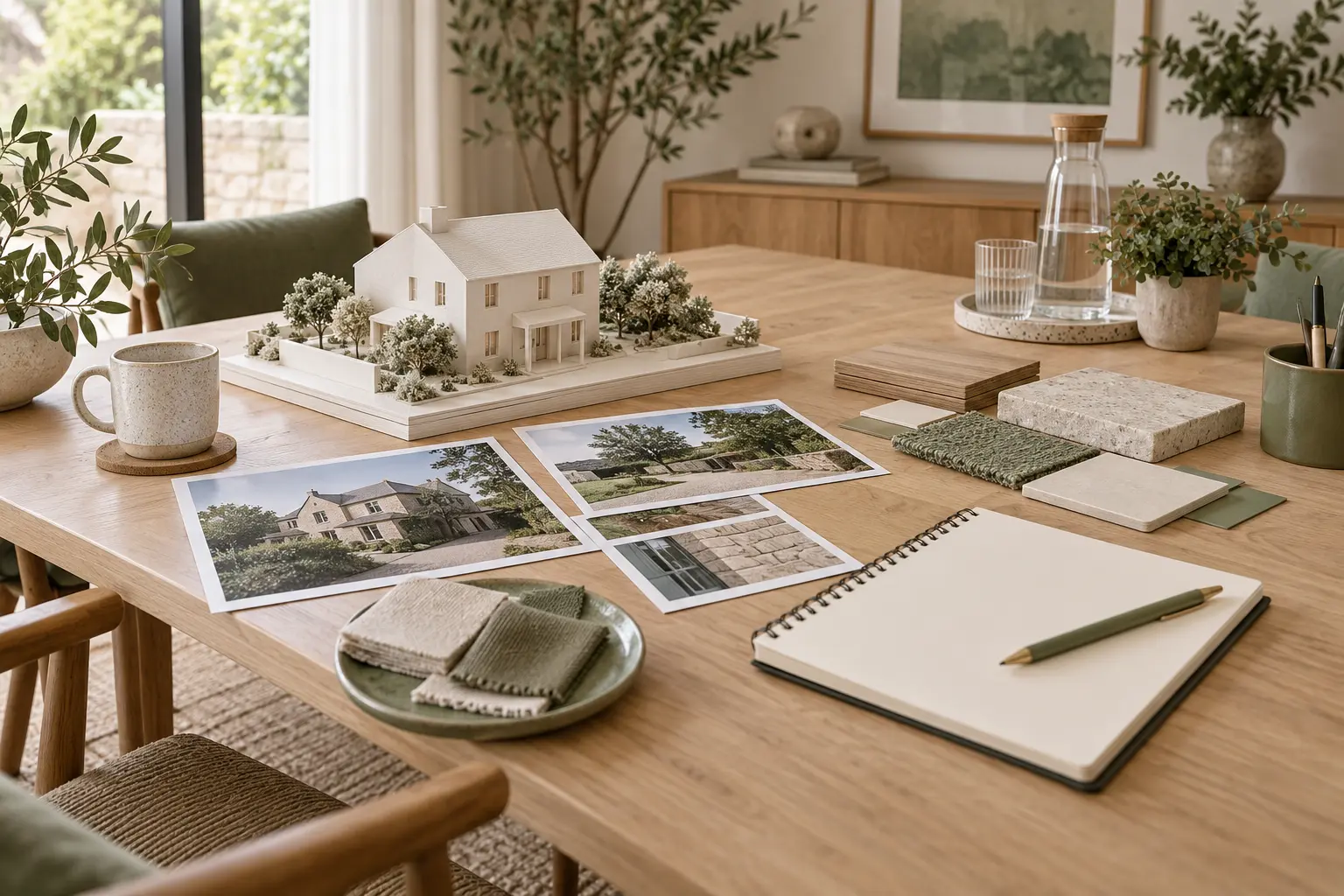
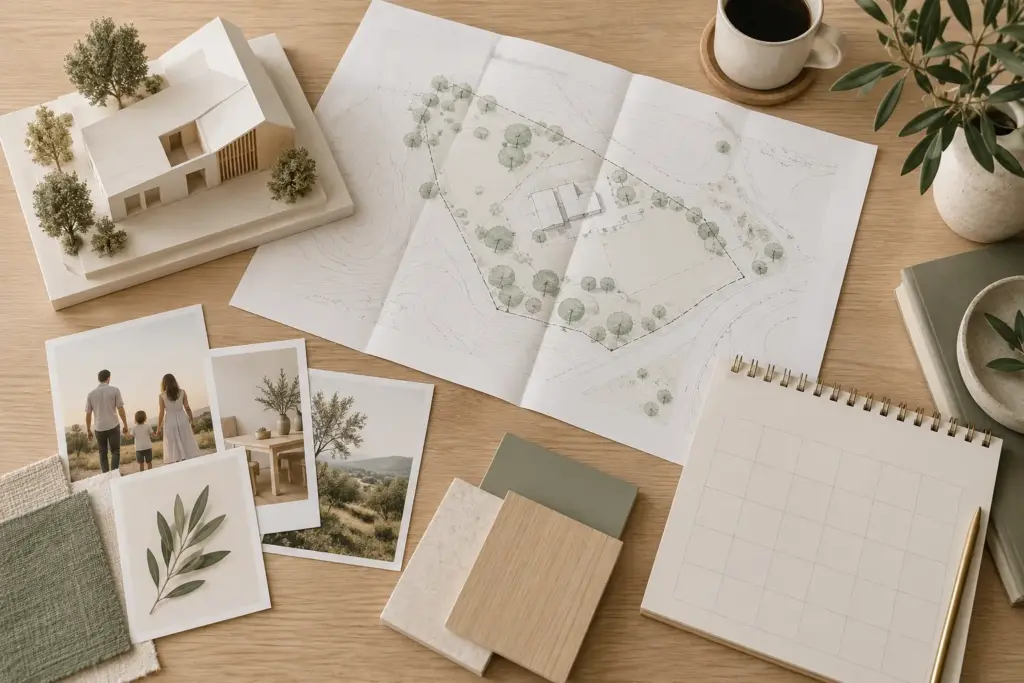
AI-generated conceptual illustration, not to scale; not an approved plan or completed Joya project.
Your landed home, your next step
Looking for an architect for your landed home?
Explore Joya’s principal-led approach to Singapore landed-home projects, from the first design discussions through submissions and construction.
Useful material may include the property address, existing plans, available survey information, photographs and earlier approval correspondence. Label the source and date where possible. A sales floor plan or old drawing can start a discussion but may not establish current dimensions, boundaries or approved conditions.
You do not need to solve every information gap before meeting. Make a list of what you have and what is missing. Ask which documents matter first, who should obtain them and whether their preparation falls within the proposed service or requires another appointment.
For an existing house, mention visible leaks, movement, previous alterations and access difficulties without trying to diagnose them yourself. The consultation can identify the need for a suitable inspection. It should not turn a visual observation into a definitive structural conclusion.
Discuss the budget as a complete project
Explain your intended overall expenditure and distinguish it from any construction-only figure you have received. Discuss professional fees, external works, specialist systems, furnishings and a contingency allowance as separate headings. The aim is to establish a consistent basis for later advice, not to obtain a reliable tender price from limited information.
Ask how the brief will be tested against affordability and when cost advice will be updated. If a preference could materially change scope, identify it early. A basement, extensive retained-building work or a complex site may require investigation before a useful cost comparison can be made.
Understand the working relationship
Ask who would lead the design, who would communicate with you and how decisions would be recorded. Discuss your availability and how other household decision-makers will participate. A project can become harder to manage when different instructions reach the team without a shared decision.
The guide to working with an architect through the project explains the wider relationship. Compare the proposed involvement with how principal-led service works, then ask how that arrangement would apply to your appointment rather than assuming a firm label guarantees particular access.
It also helps to understand how architects coordinate consultants and builders. The first meeting can identify likely collaborators, but their exact scopes and fees may need separate proposals once the project is better defined.
Leave with a clear next step
Before ending, summarise the brief, unresolved questions and the next piece of work. Ask who will do it, what information it needs, when it may be available and how it will be charged. Review any appointment proposal in writing before authorising the service.
Use the wider guide to choosing an architect for your landed home to reflect on the meeting. When you are ready, contact Joya about an initial consultation and describe the property, project stage and question you most need to resolve.
Frequently Asked Questions
Is the first architect consultation free?
It depends on the practice and the service requested. An introductory conversation may differ from a paid site visit or feasibility assessment. Confirm the fee, duration, preparation and expected deliverables before booking. If you need written advice or a specific investigation, ask for that scope to be identified separately.
Do I need complete plans before meeting an architect?
No. Bring the information you have and explain its source and limitations. The meeting can identify which surveys, existing drawings or approval records should be obtained next. Avoid assuming that a marketing floor plan or old drawing accurately represents the current building, boundaries or approved works.
Will the architect draw my house during the meeting?
Not necessarily. Some consultations include informal sketches, while others focus on the brief and required investigations. Confirm the agreed output in advance. Any early sketch should be understood within its stated purpose and assumptions; it is not automatically a coordinated design, approved proposal or construction instruction.
Should all household decision-makers attend?
It is helpful for the main decision-makers to participate or agree their priorities beforehand. If everyone cannot attend, nominate a contact and record questions for later discussion. Explain how decisions will be made so the architect can distinguish a shared requirement from an individual preference during briefing.
Your landed home, your next step
Start a conversation about your landed home
Share your property type, project priorities and where you are in the planning process. Discuss your next steps with Joya.