
Architectural Process Guides
Facade Screening Systems for Shade and Privacy



Facade screening systems can provide shade and privacy while giving a landed home a distinctive external rhythm. Their usefulness depends on placement, geometry and operation. Begin with the room and the condition being addressed, then design the screen as part of the facade rather than applying a decorative pattern to every opening.
Exterior features need a maintenance plan
BCA’s facade maintenance guidance treats the condition of exterior features as an ongoing owner responsibility. For a proposed screen, ask how fixings and moving parts will be inspected. Formal inspection requirements are a separate applicability question and should not be assumed from the presence of screening alone.
Facade screening systems should solve a defined problem
Identify the occupied position
Mark where someone sits, sleeps or works inside the room. Then examine the exposure or view affecting that position. A screen designed only from the street elevation may protect an empty part of the room while leaving the desk or bed exposed. Furniture and facade drawings need to be reviewed together.
Separate the objectives. Reducing direct sun, limiting views from neighbours and creating a filtered outlook are related but different tasks. One geometry may not satisfy all three equally well. Ask the architect to explain the main purpose and the compromise rather than describe a screen as an all-purpose environmental solution.
Check the actual sightline
Use the neighbouring levels and relevant viewing positions, including upper-floor windows. A screen that appears private from the pavement may leave a direct view from across the boundary. The privacy zoning guide helps place this detail within the wider arrangement of private and shared rooms.
Consider the night-time condition when the interior is illuminated. Do not assume that a daytime impression of privacy will remain unchanged. Review the proposed combination of screen, curtains or blinds and the way residents expect to use them. A practical solution should not rely on an unrealistic sequence of adjustments every evening.
Coordinate the screen with the opening
Show how the window or door operates behind the screen. Check handles, panel movement and the space needed for cleaning. A screen can become inconvenient if it blocks the opening’s normal use or makes access to glazing difficult. Resolve these interfaces before either package is ordered.
The facade and envelope expression guide provides the broader assembly context. Decide whether the screen is visually independent or integrated into the main form, then coordinate its support and edges. The apparent lightness of a presentation image does not establish the size or arrangement of the required structural connections.
Compare the view from a chair
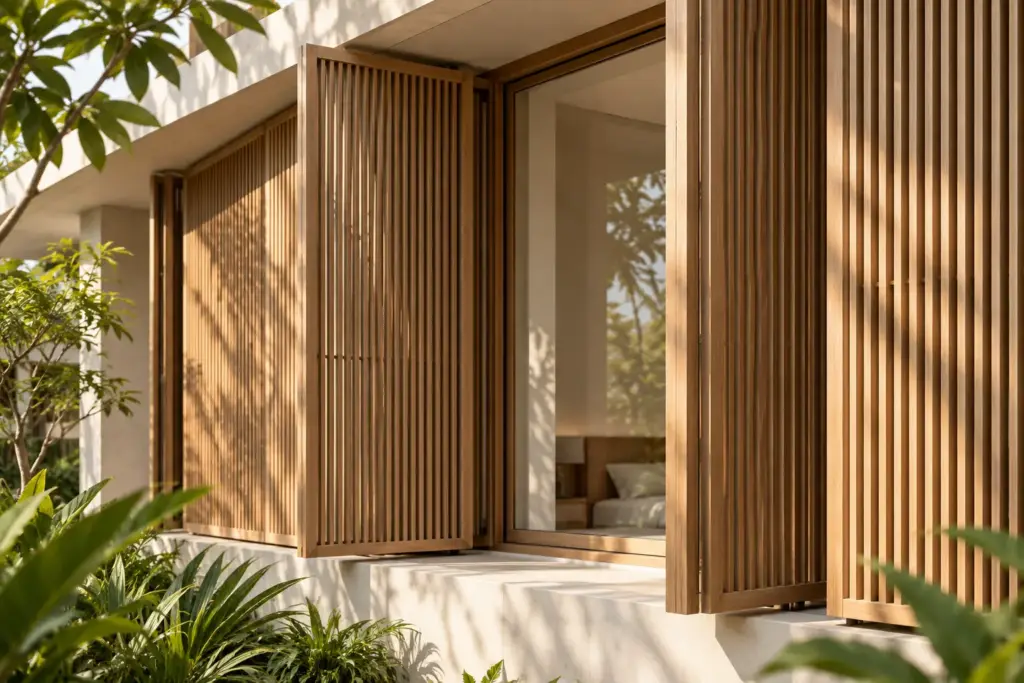
For a hypothetical bedroom screen, place a chair at the intended reading position and review the outward view through the proposed profiles. Then assess the relevant inward sightline separately. These are different questions, and a favourable answer to one does not settle the other. Record the normal panel position and whether an internal blind is also expected, so the chosen arrangement reflects how the room will actually be occupied.
Compare fixed and movable arrangements honestly
A fixed screen avoids daily adjustment but commits the room to one configuration. A movable system offers flexibility while introducing hardware, controls and maintenance. Compare both against the household’s habits. If residents are unlikely to reposition panels, the design should work reasonably in the position they will normally choose.
Ask how the system behaves during adverse weather and how its operation is explained to the owner. The appropriate design needs specialist input where required. Avoid choosing a complicated mechanism simply because it produces an impressive demonstration when a simpler arrangement could meet the actual privacy or shading brief.
Select material through the whole assembly
Look at the profile, spacing, finish and fixing detail together. A material can appear warm or delicate in a sample yet look quite different when repeated across an elevation. Review a representative section at a useful scale, including the supporting frame and the view from inside the room.
The guide to how materials shape a home’s character explores this visual relationship. For screening, also ask about expected weathering and replacement. Can a damaged component be removed individually, and will a replacement match the surrounding finish? These questions should inform procurement and handover records.
Make the final review about use
Test the screen in the conditions it is meant to address, using an appropriate design method rather than relying on a single attractive rendering. State the assumptions and any limits of the assessment. Do not promise a fixed cooling benefit or complete privacy without evidence relevant to the actual proposal.
Bring the furnished room plan, neighbouring sightlines and maintenance expectations to Joya. Agree what the screen must do before refining its pattern. A successful system should make the room easier to use while remaining compatible with the building’s construction, daily operation and long-term care.
Frequently Asked Questions
Do facade screens always reduce indoor heat?
Their effect depends on exposure, geometry and the wider room design. A screen should be assessed against the sun conditions it is intended to address. Do not assume a particular temperature reduction from its presence alone; glazing, ventilation, shading and operating habits also influence the indoor experience.
Are movable screens better than fixed screens?
Not universally. Movable systems allow adjustment but introduce operating and maintenance requirements. Fixed screens may be simpler but offer one configuration. Compare the options against the household’s likely habits and the actual shading or privacy need, including the position in which panels will normally be left.
Can a screen replace curtains for privacy?
Sometimes it may reduce the need, but that requires checking actual sightlines and night-time conditions. An illuminated interior can behave differently from the daytime view. Assess the screen and any internal covering together before assuming that a visually filtered facade provides the level of privacy residents expect.
What should be included in a screen mockup?
Show representative profiles, spacing, supports and the selected finish, with enough context to assess the view through it. If operation matters, include the relevant movement or hardware. Agree the mockup’s purpose and record the accepted details so it informs the final installation rather than serving only as a display.