Joya Architects » Blogs » Design Quality in Landed Homes: What It Actually Looks Like
Architectural Process Guides
Design Quality in Landed Homes: What It Actually Looks Like
By achmad
2026-10-15 11:46:16
Design quality in landed homes becomes visible when you connect a design decision to a useful result: a quieter bedroom, a sheltered entrance or a room that accommodates real furniture. A portfolio review should establish that connection through drawings, photographs and a clear explanation of the original brief. Attractive images start the conversation, but they cannot answer every practical question.
What performance-based guidance adds to a portfolio review
BCA’s Green Mark 2021 framework addresses energy performance alongside concerns including maintainability, health and wellbeing, and resilience. These categories offer useful prompts for homeowners assessing architectural work. Referencing them does not mean a house is Green Mark certified or that a photograph proves compliance.
The practical lesson is to look beyond appearance and ask for evidence about how a home operates. When reviewing an uncertified project, describe the actual feature and its intended purpose. Avoid treating a green wall, large window or timber finish as a performance result by itself.
How to recognise design quality in landed homes
Trace one ordinary journey through the plan
Choose a routine such as returning with groceries during rain. Follow the route from arrival to storage, then check where shoes, bags and wet umbrellas go. A successful sequence should make sense at the scale of doors, furniture and people, rather than only as a generous-looking drawing.
Repeat the exercise for a visitor using the bathroom while family members occupy private rooms. Ask which spaces are exposed along the route. Privacy depends on sightlines and thresholds as much as room labels, so request a section or eye-level view where the plan leaves something unclear.
Connect daylight to usable space
A bright photograph may reflect a particular time, exposure setting or open door. Ask where the sun comes from, what provides shade and how the room is used through the day. A useful explanation connects orientation, opening position and shading to a specific activity.
For a study, the relevant question may be screen glare. For a living room, it could be whether furniture can sit near the garden without excessive exposure. Neither larger windows nor deeper shade is automatically better; the balance should follow the room’s purpose and site conditions.
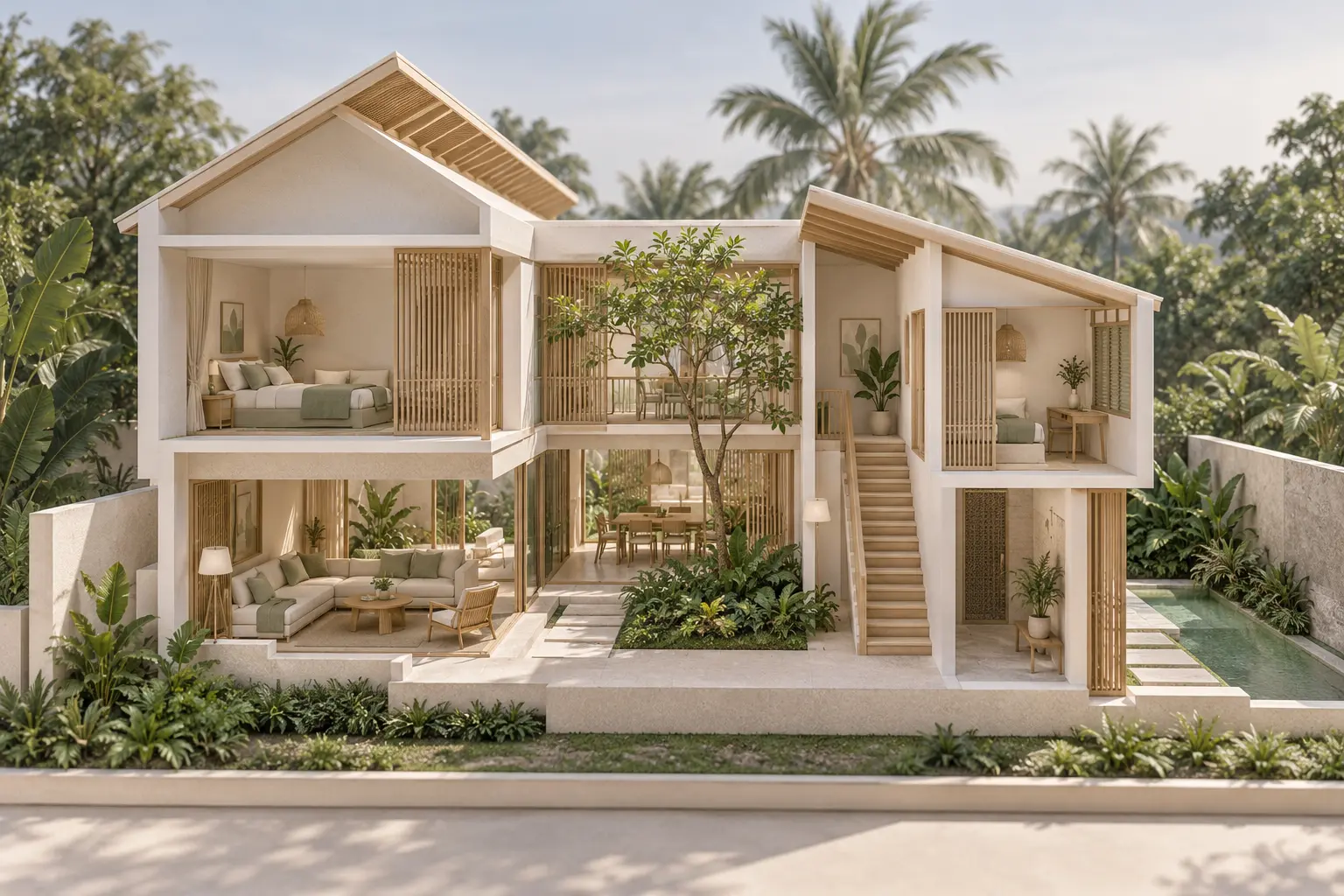
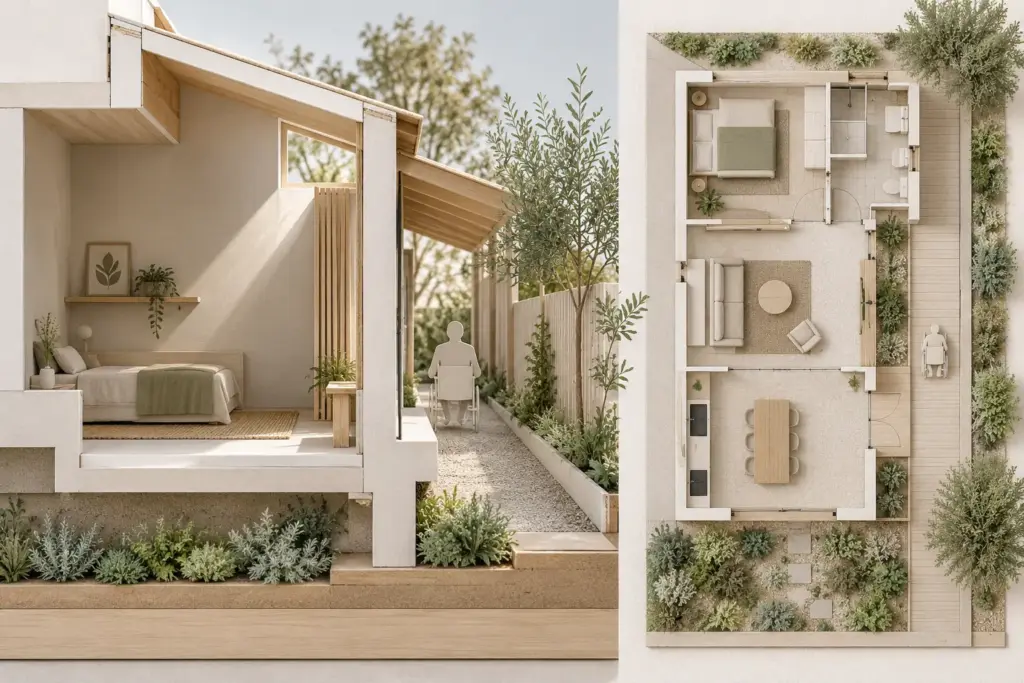
AI-generated conceptual illustration, not to scale; not an approved plan or completed Joya project.
Your landed home, your next step
Bring these ideas into your landed-home plans
Your site, lifestyle and priorities shape a home that works for you. Explore how Joya approaches the architecture of Singapore landed homes.
Architectural ideas become buildings where materials and systems meet. Ask to see a roof edge, an external door threshold or a bathroom junction. You do not need to approve the technical detail yourself. You need to understand how the team considered water, cleaning, access and replacement.
A concealed gutter may create a calm roofline, but the maintenance route still matters. A seamless-looking terrace threshold needs a considered rain-management strategy. Request a built photograph alongside the detail, and ask whether site constraints changed the original proposal.
Material choices deserve the same treatment. Rather than asking whether a surface is expensive, ask why it suits its exposure and use. Discuss which components are expected to weather, which require periodic treatment and how a damaged component could be replaced without dismantling surrounding work.
Ask for a brief-to-outcome explanation
Choose one completed project and request a simple sequence: the household’s need, the site’s constraint, the design response and the evidence available after completion. This turns a portfolio presentation into a discussion of decisions. It also helps distinguish the architect’s contribution from photography, styling or another consultant’s work.
For example, imagine a family asking for shared living space while keeping a bedroom quiet. A useful presentation would explain the separating spaces, door positions and circulation route. An image of the bedroom alone would leave the original problem largely unanswered. This is an illustrative test, not a claim about a particular project.
Allow for compromises. A design may prioritise a garden over an additional room, or simpler construction over a dramatic span. Quality includes identifying that trade-off and showing why it fitted the agreed brief. A persuasive explanation should acknowledge the cost of the chosen option, not only its benefits.
Compare evidence fairly across shortlisted architects
Use the same four headings for each practice: daily use, climate response, technical resolution and adaptability. Record what you have actually seen, what was explained and what remains unverified. A simple evidence record is more useful than assigning a precise score to incomplete information.
Start with the wider method for reading an architect’s portfolio, then use these checks to examine one or two relevant projects closely. If the explanation remains inconsistent, review the red flags to investigate in past work before drawing conclusions.
Bring one real-life test to your next meeting
Write down a daily problem your present home does not solve well and ask how the practice has approached comparable needs. Request evidence at a level the project owner has permitted them to share. Discuss your landed-home brief with Joya to begin connecting design priorities with the information your project needs.
Frequently Asked Questions
Can I judge architectural quality from photographs?
Photographs help you assess composition, materials and some relationships between spaces, but they provide limited evidence of comfort, maintenance or daily use. Ask for plans, sections and a discussion of the original brief. Where possible, compare finished photographs with the details used to construct the project.
Does a design award prove that a home will suit my family?
An award can be useful context, but it does not establish compatibility with your household, site or budget. Ask what the project was recognised for and whether those qualities matter to your brief. Assess the proposed team and its explanation of relevant completed work separately.
Is minimalist architecture always easier to maintain?
No. Maintenance depends on detailing, access, materials and exposure rather than a visual style alone. A simple-looking surface may conceal complicated components. Ask how gutters are reached, equipment is serviced and finishes are repaired, then consider those requirements alongside the appearance you want for your home.
What should I ask about an older completed house?
Ask how the materials have weathered, whether the household changed the layout and what maintenance has been needed. Request information that the owner has agreed to share. An honest account of adjustments can be more informative than pristine completion photographs, particularly when your project uses similar details.
Your landed home, your next step
Discuss the home you want to create
Tell us about your property and what matters most to you in your future home. Start a conversation with Joya about your project.