
Sustainable Architecture Innovation
Why Is Our Upstairs Bedroom Still Hot at Night? What to Check Before Replacing the Air-Con



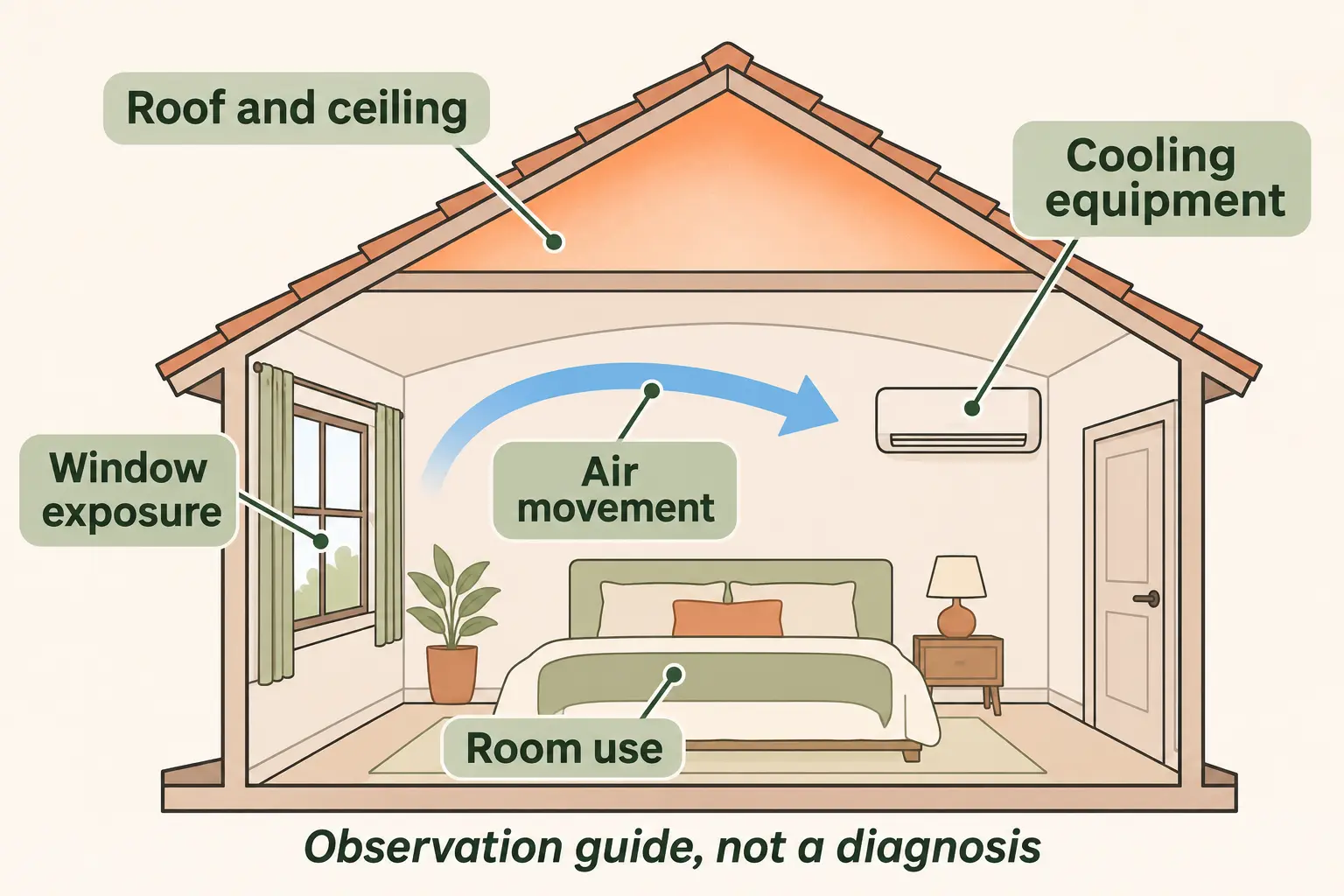
An upstairs bedroom still hot at night can reflect heat stored in the building, afternoon window exposure, limited air movement, equipment problems, or several factors together. Replacing the air-con is sensible only after the room conditions and the existing system have been assessed. Begin by recording when discomfort starts and what happens before bedtime.
In a Singapore landed home, the upstairs room may sit directly below the roof while a cooler downstairs room has quite different exposure. Comparing the two is useful, but it does not prove that the upstairs unit is undersized. The practical aim is to decide which question to investigate first.
What household energy research tells us
NEA reported that air-conditioners accounted for 24% of electricity consumption in a typical home in its 2017 household survey, published in 2018. This is historical national context, not a current estimate for landed homes or a prediction of your bill. It explains why an evidence-led equipment decision matters. Read NEA’s household energy study.
The Australian Government’s Your Home guidance on thermal mass explains how building materials store and release heat. That physical principle is relevant to investigating evening warmth, but the source’s climate-specific design recommendations cannot simply be transferred to Singapore. Your roof construction and actual exposure still need checking.
When does the upstairs bedroom become uncomfortable?
Separate the afternoon from the bedtime problem
Write down whether the room already feels warm when you return home, becomes uncomfortable after several people enter, or remains uncomfortable despite a period of cooling. Include the approximate time and weather. “Hot every night” gives an assessor less to work with than a repeatable sequence.
Notice where you feel the problem: beside the window, at the pillow, near the ceiling, or throughout the room. The temperature displayed on the air-con remote is a setting, not a measurement of all these positions. A room can also feel stuffy without the household being able to distinguish temperature, humidity and air movement.
Keep the comparison fair
If using a simple room thermometer, keep it in the same shaded, occupied location, away from the air outlet and direct sunlight. Record humidity only if your instrument measures it. Treat inexpensive readings as observations rather than a professional thermal survey, and avoid comparing instruments with unknown differences.
Do not change the curtains, fan, thermostat and bedtime routine simultaneously and then attribute a difference to one item. Record normal conditions first. If a safe, ordinary adjustment is tried later, note exactly what changed and whether the weather was comparable.
What can you observe without opening equipment?
From normal occupied areas, note which windows receive direct sun, whether curtains cover an air outlet, and whether furniture interrupts the route of air towards the bed. Photograph the room from the doorway and the bed position. There is no need to enter a roof space or remove a ceiling panel.
Record the air-conditioner’s model, approximate age if known, usual settings and last documented service. Note unusual noise, leakage or a change in cooling behaviour for the technician. Do not open electrical covers or attempt refrigerant work; those observations are reasons for an appropriate service assessment.
The wider passive cooling strategies for tropical homes guide covers shade, openings and roof coordination. Here, use those subjects as columns in your investigation rather than treating any single design feature as the answer.
Use this seven-day room observation log
Complete one row each evening at a consistent time, then add a bedtime note. This is a blank household worksheet, not a record of a Joya project. Seven days provide a manageable starting sample, not a scientific minimum or proof of a long-term pattern.
| Day | Time, weather and exposure | Room use and settings | Bedtime observation |
|---|---|---|---|
| 1 | Record time, sun and rain. | People, devices, doors, fan and air-con. | Where is it uncomfortable? |
| 2 | Use the same observation time. | Record normal operation. | Optional temperature and humidity. |
| 3 | Note sunny or overcast conditions. | Record any changed setting. | Better, similar or worse? |
| 4 | Record afternoon window exposure. | Note curtains and furniture. | Bed position versus doorway. |
| 5 | Record rain and window use. | Note occupancy and devices. | Record any equipment symptom. |
| 6 | Keep measurement location fixed. | Note weekend routine changes. | Compare like conditions. |
| 7 | Identify repeated conditions. | List unresolved questions. | Choose the first assessment. |
Photographs and notes should explain the room, not document family members unnecessarily. A sketch locating the bed, window, air outlet and door is often clearer than numerous unlabelled photos. Add the date to the sketch so later furniture changes do not confuse the record.
Which findings need an equipment or building review?
Start with servicing when operation has changed
If cooling has deteriorated or the unit behaves unusually, arrange an air-conditioning assessment first. Ask the technician to explain the finding and recommended work. A service visit may resolve an equipment issue without changes to the building, but it cannot establish the performance of an uninspected roof assembly.
If replacement is proposed, request a capacity assessment for the actual room rather than selecting a larger unit simply because the bedroom feels hot. Use NEA’s regulated-goods and energy-label information when comparing eligible models. Efficiency information helps compare appliances; it does not diagnose the cause of discomfort.
Review the building when the pattern points to exposure
A repeated relationship with afternoon sun or roof-level exposure can justify a coordinated design and building-services review, especially after equipment condition has been checked. Ask what evidence distinguishes window shading, roof work, altered room use and equipment changes. Each option should identify disruption, maintenance and unresolved assumptions.
A useful distinction is between the cause of heat entering the room and the system removing it. Improving one may help without making the other irrelevant. Request an explanation of both before accepting a package of upgrades with an unsupported comfort or savings claim.
Choose the next assessment before choosing the product
Bring the completed log, room sketch and service history to the relevant assessor. Agree what will be checked, what the findings mean and what remains uncertain. If the evidence points towards changes to the roof, facade or room arrangement, discuss the building changes your household needs with Joya. Keep the decision proportionate to the identified problem.
Frequently Asked Questions
Why is my upstairs bedroom hotter than downstairs at night?
The rooms may have different roof exposure, window exposure, occupancy and air movement, alongside differences in cooling equipment. Warmth can also persist after daytime heat has been stored in building materials. Record the timing and conditions, then have the relevant equipment or building factors assessed.
Should I buy a more powerful air-conditioner?
Not solely because the room feels hot. Have the existing system and the room’s cooling requirements assessed first. Replacement capacity should suit the actual space and operating conditions. An energy label helps compare efficiency, but neither a larger capacity nor a higher rating diagnoses the underlying problem.
Can curtains solve a hot bedroom?
Curtains may change glare, privacy and some solar exposure, but the outcome depends on the window and the wider room. They cannot be assumed to resolve roof-related heat or equipment faults. Record their position in your observation log and assess shading alongside daylight, ventilation and normal use.
Do I need an architect before calling an air-con technician?
Usually the first contact should match the problem. Changed cooling performance, leakage or unusual equipment behaviour calls for an appropriate equipment assessment. If verified findings point to roof, facade or layout changes, an architect can coordinate those building decisions with the relevant technical specialists.