Joya Architects » Blogs » Six Stages of the Design and Build Process for Landed Homes
Architectural Process Guides
Six Stages of the Design and Build Process for Landed Homes
By achmad
2026-10-08 19:01:34
The six stages of the design and build process in Joya’s service framework are Design, Submission, Detail, Tender, Interior and Management. They describe how an initial brief becomes coordinated information, a contractor appointment and a managed construction project.
Here, design and build describes the journey of creating a home. It does not automatically mean a single design-and-build construction contract. Your architect’s appointment and the selected procurement arrangement establish the actual responsibilities.
What professional guidance says about defining the process
The Singapore Institute of Architects’ practice-course outline places fee proposals, service agreements and development schedules together at inception. It also includes authority approvals and critical client deadlines in programme planning. This supports a useful starting point: agree what will be delivered before treating stage labels as commitments.
The six names below follow Joya’s architectural consultancy framework. The owner checkpoints are practical questions to discuss for your appointment, rather than a promise that every project includes an identical package.
Six stages of the design and build process
1. Design: agree what the home must achieve
Start with household routines, room relationships, privacy, daylight and future needs. Test these against the site, likely budget and development constraints. A concept should explain how the house works, not only how its front elevation looks.
The useful owner checkpoint is an agreed direction supported by plans and an understandable set of assumptions. Confirm the priorities you would protect if cost pressure emerges later. This helps the team revise the scheme without repeatedly reopening the entire brief.
2. Submission: coordinate the regulatory proposal
The appointed professionals prepare the information needed for the applicable authority route and respond to review requirements. Ask which clearances are required, who is responsible for each and what information remains outstanding.
Your checkpoint is a current submission register and clarity about what each decision permits. A submission receipt, an authority comment and an approval are different milestones. Keep the construction programme tied to the relevant outcome, including permits where required.
3. Detail: turn design intent into buildable information
Detailing resolves dimensions, junctions, specifications and interfaces between building elements. The window, wall and waterproofing detail must work together; a beautiful elevation cannot settle those connections by itself.
Ask what drawing and specification package will be issued for pricing and construction. Identify any specialist information that follows later. A clear record of unresolved items prevents preliminary assumptions from being mistaken for final instructions.
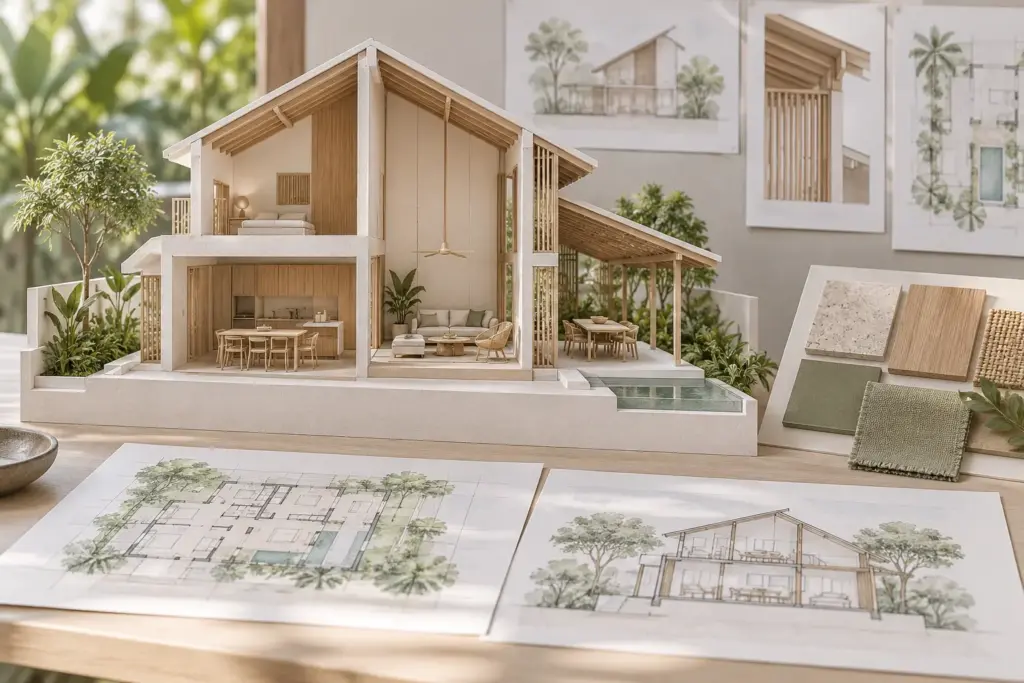
AI-generated conceptual illustration, not to scale; not an approved plan or completed Joya project.
4. Tender: compare offers on a common basis
The tender process gives suitable contractors a defined package to price. Their offers should be checked for exclusions, provisional items, programme assumptions and differences in proposed materials. The lowest headline figure may represent a different scope.
Your decision should follow a comparison that explains those differences. Confirm how clarifications and accepted alternatives will enter the contract documents. An informal conversation during tender is not a reliable substitute for an agreed record.
5. Interior: coordinate the spaces you use daily
Interior decisions bring together finishes, fittings, joinery and the experience of occupied rooms. They must connect with the architecture and services. Kitchen equipment, bathroom fittings and ceiling arrangements can influence technical information well before final decoration.
Although Interior is the fifth service label, related decisions may need to happen earlier. Agree the selection deadlines and whether furniture, specialist lighting or procurement are included in your appointment. Use samples to test colour, texture and maintenance expectations.
6. Management: carry the design through construction
During construction, the appointed scope may include site reviews, responses to queries, contractor-submission reviews and contract administration. Confirm the reporting arrangement, agreed site attendance and who issues instructions.
Management also requires a close-out plan for outstanding work, records and handover information. It does not make the architect the builder or replace the contractor’s responsibility for execution. Clear roles help issues reach the person able to resolve them.
Your landed home, your next step
Looking for an architect for your landed home?
Explore Joya’s principal-led approach to Singapore landed-home projects, from the first design discussions through submissions and construction.
A sequence is useful for communication, but design development is not six sealed compartments. For example, a concealed air-conditioning arrangement needs space in the ceiling and a maintenance route. Leaving that choice until the finishes discussion could reopen earlier drawings.
Use a decision register to connect each selection with its latest useful date. Record who approves it, what information supports the decision and which drawings will change. This preserves flexibility while making the consequences of late changes visible.
At each stage review, ask three questions: what is complete, what remains provisional and what must happen before the next commitment? A concise written answer is more useful than a broad assurance that the project is progressing.
No. The six stages describe Joya’s architectural service framework and the journey of delivering a home. A design-and-build contract is a particular procurement arrangement. Confirm the architect’s appointment, builder’s contract and allocation of responsibilities separately before assuming how the project will be organised.
Must interior decisions wait until after tender?
No. Interior choices that affect services, dimensions or construction details may be needed before tender or even earlier. The fifth stage label does not remove those dependencies. Agree a selection schedule with the team so that information reaches drawings and pricing at the right time.
What should I receive at the end of each stage?
The deliverables depend on your appointment. Ask for a schedule identifying the drawings, reports, submission records or tender information expected at each milestone. Also record outstanding assumptions and your required decisions, so that completion of a stage has a shared and useful meaning.
Does management mean an architect is always on site?
Not automatically. Site attendance and construction administration should be defined in the appointment, while statutory supervision requirements depend on the works and appointed roles. Clarify who attends, what is reviewed and how issues are reported rather than interpreting management as continuous attendance at the site.
Your landed home, your next step
Start a conversation about your landed home
Share your property type, project priorities and where you are in the planning process. Discuss your next steps with Joya.