
Architectural Process Guides
Energy and Water Efficiency at Home


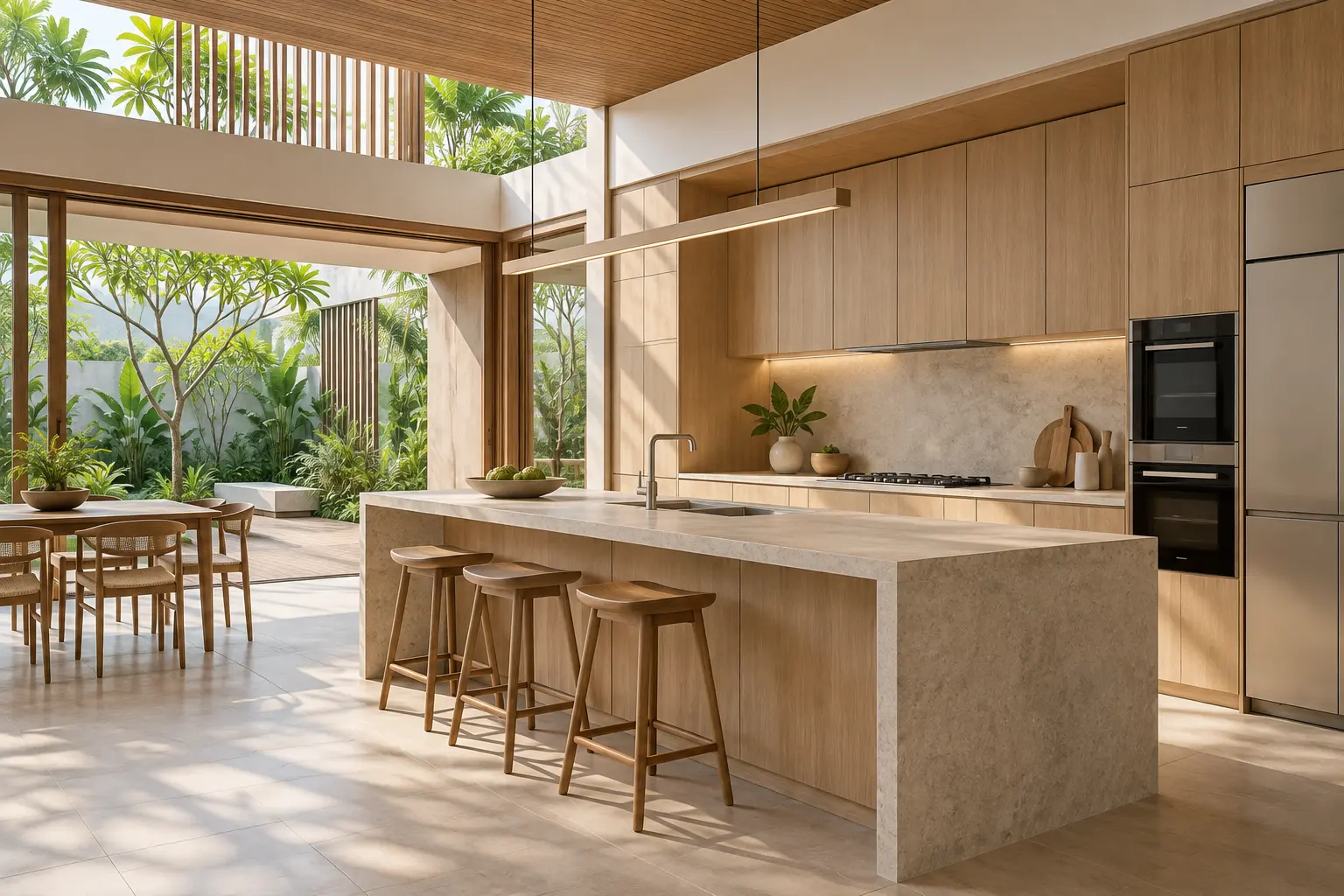
Energy and water efficiency at home starts with reducing avoidable demand and choosing suitable equipment for the way the household lives. In a landed house, room use, cooling, appliances, fixtures and outdoor areas all contribute. Treat efficiency as a coordinated operating plan rather than expecting one product or device to deliver a guaranteed reduction in bills.
Use official labels as product information
NEA’s energy-labelling resources support comparisons between relevant appliances. PUB’s water-fitting guidance explains the Mandatory Water Efficiency Labelling Scheme for covered fittings. Check the actual model and current label; neither label is a prediction of the household’s total consumption or a certification of the whole home.
Energy and water efficiency at home begins with demand
Identify the main activities
List the rooms and equipment used for long periods, alongside activities that require substantial water or hot water. Include outdoor uses where relevant. The purpose is to understand the household’s pattern before comparing products. A device that is efficient in a test can still be an unsuitable choice if its capacity or role does not match the need.
Use existing bills as context where available, but interpret them carefully. Occupant numbers, weather, travel and changes in routine affect consumption. A new house may also have a different area and set of facilities. Avoid treating a simple before-and-after bill comparison as proof of a single design measure without considering those differences.
Reduce unnecessary demand through the brief
Ask whether rooms, schedules and equipment can be organised more sensibly before adding technology. A space used occasionally may not need the same operating arrangement as a daily workspace. The sustainable systems guide helps connect those choices to the whole-house strategy and the responsibilities of the relevant consultants.
Discuss comfort expectations honestly. Efficiency should not depend on residents tolerating an arrangement they will immediately override. A realistic brief allows the team to assess suitable controls and operating modes, with the intended experience clearly stated rather than hidden inside an optimistic consumption estimate.
Compare products on a meaningful basis
For appliances, compare models that serve the required purpose and capacity. Read the available label and product information together. Ask suppliers to explain relevant installation conditions and limitations, and avoid comparing a small appliance with a much larger one solely by a single headline efficiency statement.
For water fittings, consider the intended use as well as the rating. Confirm compatibility and installation requirements with the appropriate professional. A labelled product should still function properly within the proposed plumbing arrangement. The goal is a suitable selection that residents can use normally, supported by relevant product information rather than a promise of universal savings.
Create a useful household comparison
If the family wants to review consumption after moving in, record occupancy and major routine changes alongside bills. Note extended absences, new equipment and maintenance events. The purpose is not to create a complex monitoring project; it is to give unusual changes enough context to investigate sensibly. A sudden increase may prompt a check, but the bill alone does not identify its cause or justify blaming a particular design feature.
Coordinate controls and access
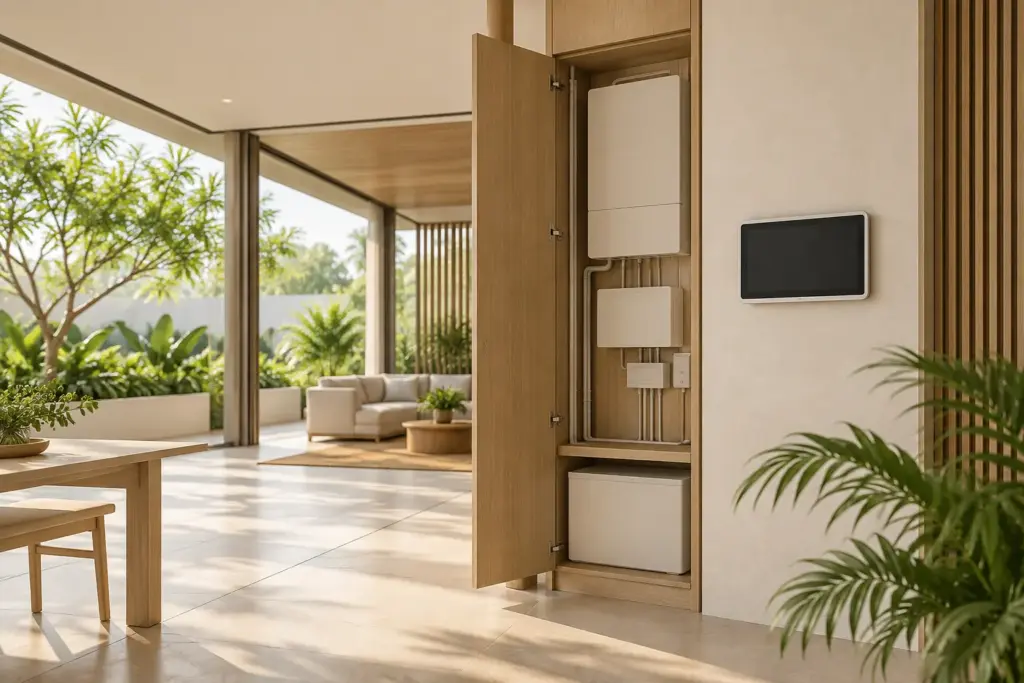
Place controls where users can understand and reach them. Complicated schedules or hidden settings can make an efficient system difficult to operate as intended. Ask the design and services team to explain ordinary use, temporary overrides and what should happen when the household is away for an extended period.
Keep servicing practical. Filters, valves and relevant equipment need appropriate access, and the owner should know who maintains them. Concealing every component behind fixed joinery can create avoidable disruption later. Review the service route and replacement requirements before construction closes off the surrounding space.
Include outdoor consumption and maintenance
Gardens, pools and cleaning arrangements should form part of the household brief where they are proposed. Discuss their operating requirements with the relevant specialists. Do not assume that an outdoor feature is negligible simply because it sits beyond the main floor plan or is described primarily as a landscape element.
If water reuse or collection is proposed, obtain appropriate professional advice on the intended use and applicable requirements. Define the system and its maintenance responsibilities. A storage tank alone is not evidence of an efficient or suitable arrangement, and unsupported claims about savings should not replace a coordinated design and operating assessment.
Keep claims proportionate to evidence
The Green Mark and sustainability guide explains the distinction between product information and building-level recognition. When a proposal includes a savings estimate, ask for its assumptions and comparison basis. Record whether it is a design estimate, a product test result or measured performance from the actual home.
At handover, retain model details and operating instructions, then review consumption alongside occupancy and maintenance records. Bring the household schedule and priority concerns to Joya so efficiency can inform the design early. The useful result is an understandable home whose equipment, fittings and routines work together without relying on exaggerated savings claims.
Frequently Asked Questions
Do more efficient appliances always reduce the total bill?
Not necessarily. Total consumption also depends on capacity, operating hours, occupant behaviour and the rest of the household’s demand. Use labels to inform suitable product comparisons, then assess the intended use. A product rating should not be presented as a guaranteed reduction in the home’s overall utility costs.
Should water fittings be selected only by their rating?
Use the rating as relevant information, but also confirm the intended use, compatibility and installation requirements. The appropriate professional should assess the proposed plumbing arrangement. A suitable fitting needs to work properly for the household, with its efficiency information considered alongside practical operation rather than as the only selection criterion.
Can bills prove that a design measure worked?
Bills can provide useful evidence, but changes in weather, occupancy, floor area and routines may affect the comparison. Interpret the data with those factors in mind. A simple reduction after moving house does not automatically identify which individual design decision caused it or establish a reliable saving for another household.
What should be checked before accepting a savings estimate?
Ask what is being compared, which operating assumptions are used and whether the figure comes from testing, modelling or actual measurement. Check that the equipment and household scenario match the proposal. A clear estimate states its limitations instead of presenting a single number as a guaranteed result for every home.