



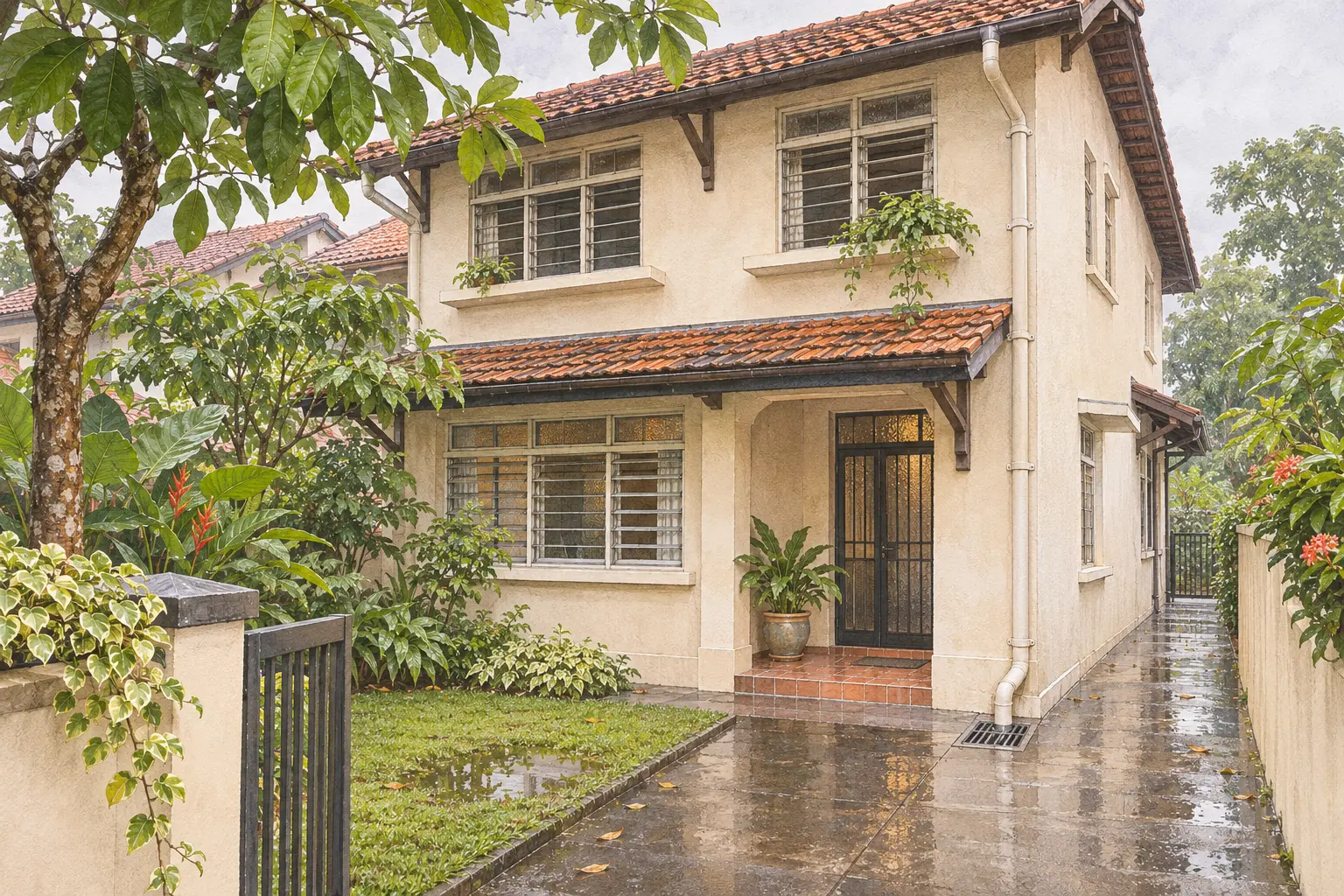
If you are buying an older landed house, a second visit after rain can help you identify questions that a dry-weather viewing missed. Record where water remains, which surfaces look wet and how outside ground relates to doorways, then arrange appropriate professional investigation. A clear visit does not prove that the house is free of leaks, drainage problems or concealed defects.
The aim is a useful evidence pack, not a verdict on the property. That pack should help an architect, engineer, surveyor or building-condition specialist decide what requires closer inspection before you base a purchase or design decision on the existing house.
PUB’s services-plan guidance distinguishes infrastructure information from verification on site. It directs Qualified Persons to obtain relevant services information and check existing conditions rather than assume that records alone establish every connection or location.
For a buyer, the practical implication is narrower: a visible drain and a reassuring plan are not a complete drainage assessment. Your viewing notes can identify where an adviser should investigate. They cannot establish pipe capacity, lawful connections, required platform levels or the cause of a recurring wet patch.
Arrange access with the seller or agent and explain the purpose in advance. Ask whether you may photograph accessible rooms, external walls and ground surfaces. Record the visit date, approximate time since rainfall and whether the rain was continuing; do not invent a rainfall intensity or measurement you did not obtain.
Bring the sales plan, a simple room sketch and a phone or camera. Give each observation a location code, such as front entrance F1 or rear kitchen R1, so a later photograph can be matched to the same position. A sequence of wide and close views is more useful than an unlabelled collection of stains.
Stay on accessible, stable routes. Do not climb onto roofs, open inspection chambers, move electrical fittings, enter flooded areas or disturb finishes to investigate. If water is near electrical equipment, a ceiling is visibly sagging or an area appears unstable, keep clear and ask the owner to arrange qualified assistance.
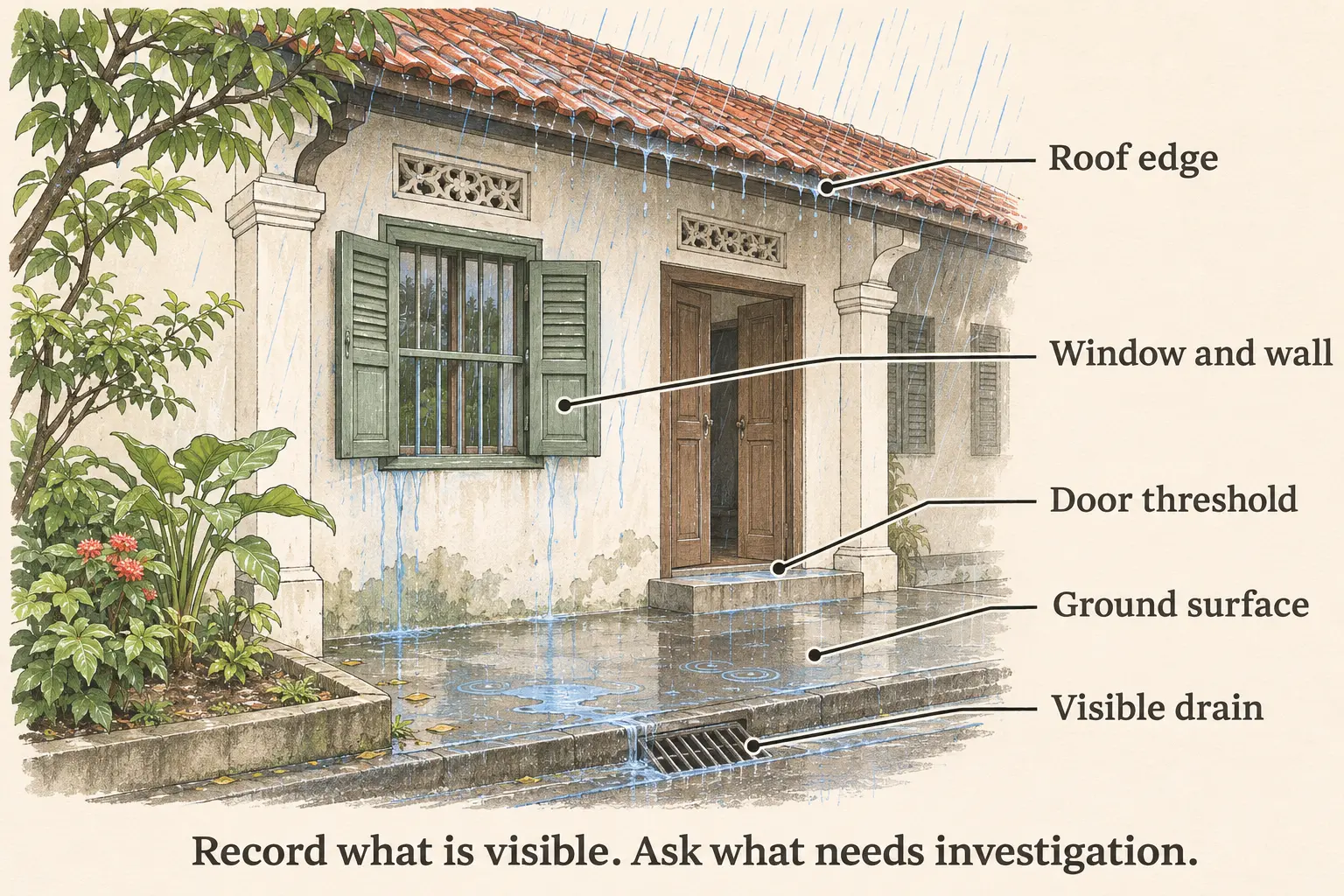
Start at the entrance and walk only where access is safe. Note shallow ponding, water crossing a path, overflow visible from a roof edge and surfaces that remain wet while nearby areas have dried. Include the adjacent doorway or wall in the photograph so the location has context.
Describe ground relationships without claiming survey levels. For example, write “paving appears close to the rear door threshold” rather than “the platform is non-compliant”. Ask for a level survey when the relationship matters to a proposed extension, new entrance or change to the garden.
Look at visible ceilings, window surrounds and wall bases in accessible rooms. Record discolouration, peeling finishes, fresh local repainting or an unusual smell as observations, not proof of a particular defect. Ask whether the condition changes with rain, air-conditioner use or plumbing use.
A seller’s explanation is useful history but should remain attributed to the seller. “Owner reports repair in June” is different from “leak repaired”. Request the repair scope and any available follow-up record, especially if your purchase plan depends on retaining that room or roof.
Copy the following fields into your viewing notes. The examples are hypothetical and deliberately stop short of a diagnosis. Add one row for each location and keep the original photographs alongside the register rather than marking only a summary plan.
| Location and visible record | Context to record | Question for the appropriate adviser |
|---|---|---|
| F1: shallow water beside entrance paving | Photo number, time after rain, nearby grate and threshold | What survey or drainage investigation would establish the cause and implications? |
| R1: damp-looking patch below kitchen window | Inside and outside views; seller’s account of previous repairs | What investigation distinguishes possible rain entry from other moisture sources? |
| U1: stain on an upstairs ceiling | Room location, visible extent, whether reportedly recurring | Which specialist should inspect, and what access would be needed? |
| S1: garden surface appears higher than adjacent path | Photograph relationship only; levels not measured | Would verified ground and floor levels affect the intended works? |
Finish every row with a responsible adviser, evidence requested and status. Use “not inspected” where access was unavailable, rather than leaving the space blank. That distinction prevents a later reader from assuming an unvisited roof void or locked room was checked and found satisfactory.
Similar marks can have different causes, and more than one source of moisture may be involved. A photograph cannot reliably identify concealed construction, the condition behind a finish or the extent of a repair. Avoid requesting a fixed repair price before the relevant specialist has established an adequate scope.
Ask the adviser what their inspection covers and excludes. A visual visit, measured survey, structural assessment and targeted water-ingress investigation answer different questions. Agree who will obtain permission for any intrusive work and how the findings will be recorded.
Consider a hypothetical buyer who wants to keep an upstairs bedroom beneath a stained ceiling. The important question is not simply whether the stain can be painted over. It is whether the investigation could change roof retention, room availability, the work sequence or the allowance on which the purchase depends.
Obtain available approved plans, relevant alteration records, repair documentation and current survey information through the appropriate channels. Ask the project team to identify gaps and discrepancies. Keep statements from the seller separate from documents and professional findings, even when everyone expects the issue to be straightforward.
Then use the observations when reviewing the assumptions in a plot feasibility study. If the proposed home relies on retaining a roof, using a low room or building over a service corridor, the study should state what is confirmed and what remains conditional.
Prioritise unknowns that could change the decision, not just the most noticeable marks. Ask your professional advisers and conveyancing lawyer which investigations or documents are needed before you rely on the property information. This worksheet is a preparation tool, not a building-condition report or legal due-diligence checklist.
A useful outcome is a short register of observed conditions, unavailable areas and unresolved decisions. Ask for the next investigation and its purpose before discussing finishes or assuming a repair allowance. Keep the original evidence so later findings can be traced back to a particular place and date.
If the observations affect whether the existing house can support your plans, bring the worksheet, available records and household brief to Joya’s architectural consultancy. The next discussion should distinguish design questions from inspections that need the appropriate engineer, surveyor or condition specialist.
No. One visit records conditions at one moment and may not reveal intermittent or concealed water entry. Note the timing and accessible areas, ask about previous incidents and repairs, and arrange the appropriate inspection if the purchase or renovation depends on retaining the roof.
Do not prioritise observation over safety. Arrange a suitable visit with the owner and stay clear of flooded, slippery, unstable or electrically hazardous areas. A safe visit after rain, supported by dated records and professional investigation, is more useful than taking risks during severe weather.
An invoice can help establish what was reportedly done, by whom and when. It does not necessarily show that the underlying cause was identified or that the repair remains effective. Ask the relevant adviser what follow-up evidence or inspection would support reliance on that work.
Send the address, available plans, labelled photographs, visit timing and a concise list of concerns. Explain which parts of the house you hope to retain and any access restrictions. Ask the inspector to confirm their scope, exclusions and whether other specialist assessments may be needed.