Landed Project Roles: Architect, Engineer, QP and Builder
By achmad
2026-10-14 19:16:05
Landed project roles describe different kinds of responsibility: the architect develops and coordinates the agreed architectural work, the civil and structural engineer addresses engineering within their scope, the QP holds a specified statutory appointment, and the builder carries out the contracted construction. These roles can interact without becoming interchangeable.
Understanding the distinctions helps an owner send questions to the right person and recognise gaps in appointments. Start with named responsibilities rather than assuming that the largest company or most senior person handles everything.
Why statutory appointments need their own record
BCA’s construction-site records guidance sets out records to be maintained by the appointed QP. This illustrates why professional duties need more precision than a general promise to visit the site.
Keep statutory appointments separate from the commercial service schedule, then show where they overlap. The owner should be able to identify the person responsible for each required role and the agreed reporting route for the broader project.
Landed project roles: four responsibilities to distinguish
The architect’s architectural scope
The architect can translate the brief into a spatial and building design, develop drawings and specifications, and coordinate information from other disciplines. Tender support and construction administration depend on the appointment rather than following automatically from the title.
Ask what architectural decisions remain outstanding at each stage. A coordinated design review should expose interfaces, such as the effect of a beam on a window or the space required for a service route, before they become site problems.
The civil and structural engineer’s scope
The engineer assesses and designs relevant structural systems within the appointment. This can involve existing structures, foundations and other elements affected by the proposed works. The necessary investigations and design information should be identified early.
For professional verification, the Professional Engineers Board provides directories covering practitioners and relevant entities. Check the proposed professional and discipline, then agree the actual project deliverables and coordination arrangements.
The QP appointment
QP describes a specified regulatory role rather than an extra trade on site. A suitably qualified professional may hold that role alongside design services. The scope and eligibility depend on the work and applicable requirements.
Read when a landed project needs a QP for the assessment questions. Ask the team to identify each appointment explicitly, including the relationship between design and supervision roles where relevant.
The builder’s construction scope
The builder organises labour, materials, subcontractors and construction activities to deliver the contracted work. The contract and applicable requirements establish the detailed obligations. Design input from a specialist or builder also needs an identified review and approval route.
An owner’s architectural review service should not be mistaken for taking over the builder’s day-to-day work. Ask how workmanship issues, site queries and proposed alternatives are recorded and communicated to the appropriate party.
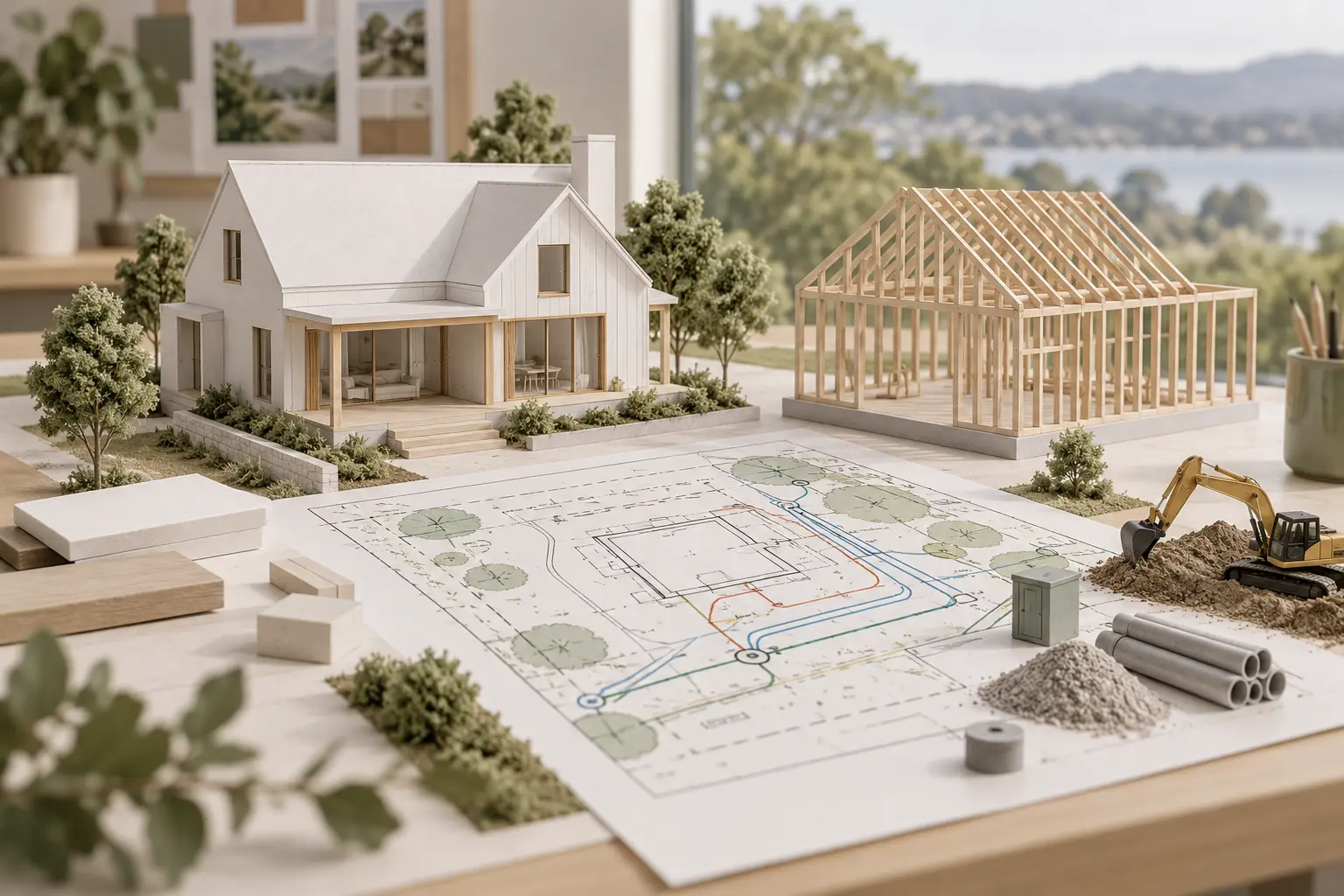
AI-generated conceptual illustration, not to scale; not an approved plan or completed Joya project.
Your landed home, your next step
Looking for an architect for your landed home?
Explore Joya’s principal-led approach to Singapore landed-home projects, from the first design discussions through submissions and construction.
Imagine a ceiling service route meeting a structural beam where the design intends a tall window. The issue crosses several disciplines. Sending a photograph to everyone is only the start; someone needs to assemble the dimensions and define the decision required.
The architectural team assesses spatial and visual consequences. The structural engineer considers structural options within their responsibility, while the relevant services specialist checks the service requirements. The builder contributes site information, sequencing and pricing where applicable.
The appointed professionals then identify any approval implications, and the owner decides matters reserved for the client, such as accepting an additional cost. The final agreed response should reach the drawing set and the formal instruction process.
Separate advice, approval and instruction
A design discussion is not necessarily an instruction to build. Agree who can issue contractual instructions and how owner decisions become documented directions. This prevents a useful technical conversation from being mistaken for permission to change the work.
Maintain a query register with the issue, responsible responder, due date and current status. Link the answer to the relevant drawing revision. If a solution changes cost or time, record that assessment through the agreed procedure as well.
Do not ask the team to bypass a required review simply because the proposed change looks small. The people responsible for the affected discipline should assess it. Equally, avoid sending every routine site matter to the owner when the appointment already assigns authority elsewhere.
What the owner remains responsible for organising
The owner needs a complete set of appointments and timely decisions on the brief, budget and proposed changes. Agree access to records and the property, and identify who consolidates family feedback. Conflicting instructions can undermine otherwise clear professional roles.
At appointment stage, use a responsibility table with columns for task, professional or contractor, deliverable and approval route. Where a role is not yet appointed, mark it as unresolved instead of placing it under a vague heading such as coordination.
Review the table when the scope changes or a team member changes. A responsibility schedule is useful only if it reflects the current project and the people actually performing the work.
Confirm the arrangement before construction
The comparison of architect, designer and contractor-led delivery explains how contractual relationships can vary. Whatever arrangement you choose, ask the team to demonstrate how an ordinary query becomes an assessed, approved and communicated response.
Discuss project responsibilities with Joya using your proposed scope and existing consultant information. Clear appointments make it easier to resolve issues while preserving the distinct responsibilities on which the project depends.
Frequently Asked Questions
Can the architect also be the QP?
A suitably qualified architect can hold an applicable QP appointment alongside architectural services. The relevant work and rules determine eligibility and duties. Ask the team to state each role explicitly, rather than assuming an architectural appointment automatically covers every statutory role needed for the project.
Does coordination make the architect responsible for every discipline?
No. Coordination connects information and identifies interfaces, while each professional remains responsible for their appointed work and applicable duties. Define the coordination lead, review process and decision route clearly. This helps resolve conflicts without treating one appointment as a substitute for all the others.
Who should answer a structural question raised on site?
Refer the technical assessment to the appointed professional responsible for the affected structural work through the agreed project communication process. Provide dimensions, photographs and relevant drawings. The response may also require architectural, cost or programme coordination before it becomes an instruction for the builder to implement.
Can the owner give instructions directly to a subcontractor?
Follow the communication and instruction procedure agreed for the project. Informal directions can create conflicting information or unrecorded cost and timing changes. Raise the requested outcome through the appointed team so that the relevant assessment, owner decision and contractual instruction are documented consistently before implementation.
Your landed home, your next step
Start a conversation about your landed home
Share your property type, project priorities and where you are in the planning process. Discuss your next steps with Joya.