

Renovation Guides

21+ Small Bathroom Renovation Tips to Maximize Space (and Avoid Costly Mistakes)

By achmad December 5, 2025

At its core, a successful renovation hinges on a collection of smart small bathroom renovation tips that blend clever design with thoughtful functionality. Many homeowners experience the daily frustration of a small, cluttered, and inefficient bathroom—a space that should be a sanctuary but instead feels like a challenge.

This guide promises to change that. We will provide actionable, expert advice not only on what to do, but crucially, what costly mistakes to avoid. Our goal at JOYA Architects is to help you transform your compact bathroom into a space that feels significantly larger, functions flawlessly for your lifestyle, and exudes a sense of enduring luxury, all while respecting your budget.

Tip 1-5: Master the Layout & Fixtures to Reclaim Your Space

The foundation of a successful small bathroom renovation lies in its spatial planning. The right layout and fixtures can dramatically alter the perception of space, turning a cramped room into an open and airy environment.

Mistake to Avoid #1: Keeping a Bulky, Space-Eating Vanity.

A traditional, floor-standing vanity can be the single biggest obstacle in a small bathroom, consuming valuable floor area and making the room feel heavy and confined.

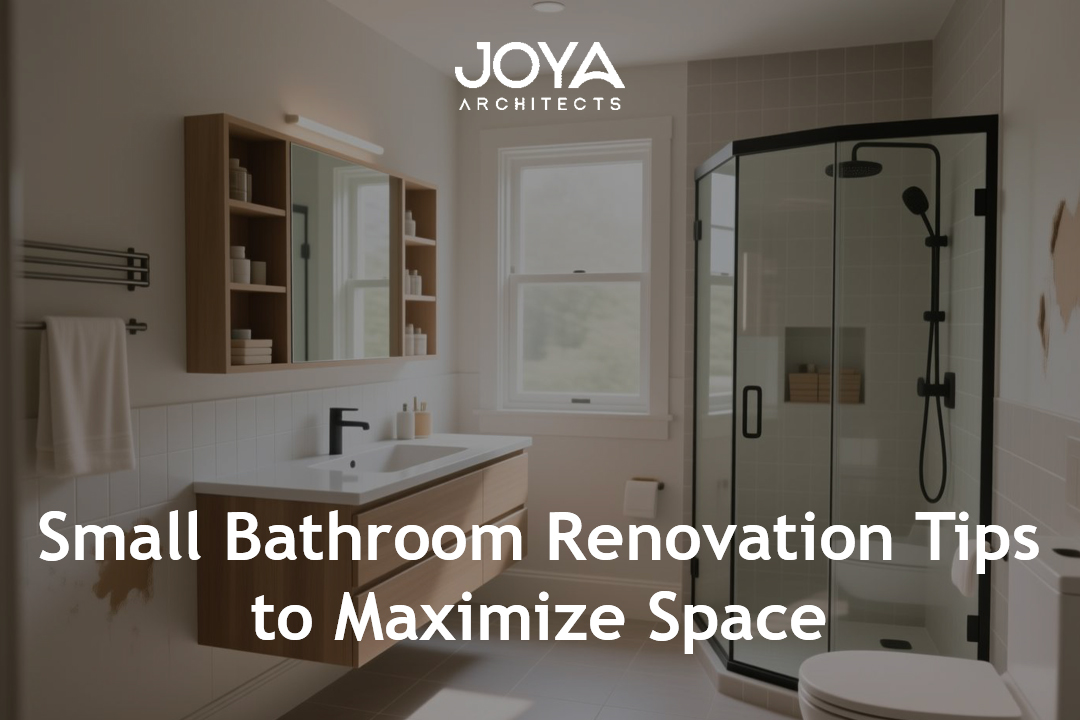
  • Solution: Opt for a wall-mounted (floating) vanity. By lifting the cabinet off the ground, you expose more floor space, which instantly creates an illusion of a larger, more breathable room. This approach aligns with a minimalist aesthetic and simplifies cleaning.
  • Solution: Consider a narrow-depth or console vanity. These slender profiles provide essential counter space and sink access without protruding too far into the room. A model with an open shelf below is perfect for storing neatly folded towels or decorative baskets, adding both function and a touch of warmth.
  • Solution: For powder rooms or minimalist bathrooms where extensive storage isn’t a priority, a classic pedestal sink offers a timeless, space-saving elegance.

Mistake to Avoid #2: Letting the Wrong Door Steal Valuable Real Estate.

A standard inward-swinging door can consume up to a square metre of usable space, dictating where you can place fixtures and hindering movement.

  • Solution: Replace it with a pocket door or a sliding barn door. A pocket door disappears seamlessly into the wall, completely reclaiming the floor space. A sliding barn door offers a stylish, architectural statement while achieving the same space-saving goal.
  • Solution: For showers, swap bulky framed doors or shower curtains for frameless sliding glass doors. The absence of frames and the clear glass maintain uninterrupted sightlines, making the entire bathroom feel like one continuous, larger space.

Mistake to Avoid #3: Sticking with a Standard Tub or Shower.

A conventional bathtub or a bulky shower enclosure can dominate a small bathroom, making it feel cramped and dated.

  • Solution: Install a walk-in shower with a single glass panel. This barrier-free design eliminates visual clutter and creates a seamless transition from the main bathroom area into the shower, which is a powerful technique for enhancing the sense of space.
  • Solution: A corner shower is an excellent solution for maximising floor space in awkward or square layouts, tucking the shower neatly away.
  • Solution: If a bathtub is non-negotiable, consider a Japanese-style soaking tub. These tubs are deeper and offer a luxurious, immersive soak but have a smaller footprint than conventional models.

Mistake to Avoid #4: Wasting Wall Cavity Space.

The space between wall studs is often overlooked but represents prime real estate for storage that doesn’t intrude into the room.

  • Solution: Build recessed shower niches. These are perfect for holding shampoos, soaps, and other essentials, eliminating the need for clumsy shower caddies that add clutter.
  • Solution: Install a recessed medicine cabinet. This provides deep, hidden storage for toiletries, keeping your vanity countertop clear while the mirrored surface sits flush against the wall for a clean, streamlined look.

Tip 6-11: Implement Genius Storage Solutions to Eliminate Clutter

Clutter is the enemy of a small space. By implementing smart, multi-layered storage solutions, you can ensure everything has a place, creating a calm and organised environment.

Mistake to Avoid #5: Only Thinking Horizontally.

Relying solely on vanity counters and floor cabinets is a common error that leads to a cluttered and inefficient use of space.

  • Solution: Go vertical. Utilise the wall space above the toilet by installing sleek floating shelves or a tall, narrow étagère or ladder shelf. This area is perfect for storing towels, toilet paper, or decorative objects.
  • Solution: Look even higher. The space above the door frame is an often-forgotten spot perfect for a high shelf to store items you don’t need daily, like bulk supplies or extra linens.

Mistake to Avoid #6: Ignoring the Power of Smart Organization.

Simply having cabinets isn’t enough, without internal organisation, they quickly become chaotic jumbles that are frustrating to use.

  • Solution: Use drawer dividers and modular in-cabinet organisers. These simple tools transform a deep drawer or cabinet into a perfectly organised system where every item, from makeup to medication, has its designated spot.
  • Solution: Utilise stylish baskets and bins on open shelves. This strategy conceals visual clutter, groups similar items together, and introduces pleasing textures and materials into your design scheme.

Mistake to Avoid #7: Forgetting Unconventional Storage Spots.

In a small bathroom, every surface is a potential storage opportunity. Don’t limit yourself to traditional cabinets and shelves.

  • Solution: An over-the-door rack is incredibly versatile. It can hold towels, robes, or even a hanging shoe organiser repurposed to store toiletries and hair tools.
  • Solution: A narrow rolling cart provides flexible, mobile storage. It can be neatly tucked away between the toilet and the vanity and pulled out whenever needed.
  • Solution: Replace space-consuming towel bars with elegant hooks. Not only do hooks take up less wall space, but they are also more efficient, allowing multiple towels to be hung in the same area.

Tip 12-16: Use Color & Light to Create an Illusion of Space

Visual perception is everything in a small room. The right combination of colour, reflection, and light is one of the most powerful and cost-effective small bathroom renovation tips for making a space feel bright, open, and expansive.

Mistake to Avoid #8: Choosing Dark, Matte Colors.

Dark colours absorb light, while matte finishes diffuse it. Together, they can make a small bathroom feel smaller, darker, and more enclosed.

  • Solution: Paint walls in light, neutral colours. Hues like soft whites, pale greys, and light blues are excellent at reflecting light, which instantly makes the room feel brighter and more open.
  • Solution: Use a semi-gloss or high-gloss paint finish. The subtle sheen bounces light around the room, creating a luminous effect that enhances the sense of space.
  • Solution: Paint the ceiling the same light colour as the walls, or even a shade lighter. This technique draws the eye upward and blurs the boundaries of the room, making the ceiling feel higher.

Mistake to Avoid #9: Using Only One Central Light Source.

A single overhead light creates harsh shadows and fails to illuminate the space evenly, making it feel dim and uninviting.

  • Solution: Implement layered lighting. A successful lighting scheme combines ambient (overall), task (functional), and accent lighting. Start with a central ceiling fixture and add focused lighting where you need it most.
  • Solution: Install wall sconces on either side of the mirror. This provides flattering, even light for grooming tasks and eliminates the unflattering shadows cast by overhead lighting alone.
  • Solution: Consider an LED-backlit mirror. This provides a soft, ambient glow that appears to push the mirror off the wall, creating a sense of depth and a modern, high-end feel.

Mistake to Avoid #10: Using a Small Mirror.

A small mirror can feel undersized and insignificant, doing little to enhance the perception of space.

Solution: Install the largest mirror possible. A mirror that spans the entire wall above the vanity, or even a custom-sized mirror covering a significant portion of a wall, will work wonders. It reflects light and views, effectively doubling the visual size of the space.

Mistake to Avoid #11: Blocking Natural Light.

Natural light is a small bathroom’s best friend. Heavy curtains or blinds can block this valuable asset.

Solution: If you have a window, opt for treatments that maximise daylight while ensuring privacy. A simple frosted film applied to the glass, or light and airy sheer blinds, will allow sunlight to pour in without compromising your privacy.

Tip 17-21: Final Details That Make a Big Impact

The finishing touches—from tiles to technology—are what elevate a well-planned bathroom into a truly exceptional space. These final decisions can unify the design and add a layer of sophistication.

Mistake to Avoid #12: Using Small, Busy Tiles.

Small tiles with numerous grout lines create a grid-like pattern that can make a floor or wall look busy and feel smaller than it actually is.

  • Solution: Choose large-format tiles. Tiles that are 60x60cm or larger create fewer grout lines, resulting in a cleaner, more seamless surface that makes the space feel more expansive and uncluttered.
  • Solution: For the ultimate seamless look, run the same floor tiles directly into a curbless shower area. This continuity is a key principle in wet room design and visually merges the spaces.
  • Solution: Laying rectangular or square tiles on a diagonal can trick the eye, making the floor appear wider and longer.

Future-Proofing Tip: Incorporate Universal Design.

Designing only for the present can lead to a space that becomes challenging to use in the future. Universal design is not merely about accessibility for the elderly or disabled, it’s about creating a more comfortable, ergonomic, and enduring space for everyone, at any stage of life. This philosophy of creating architecture that endures is central to our work at JOYA. A well-designed bathroom should be effortlessly usable, safe, and comfortable for a child, a guest, or yourself decades from now.

  • Install a curbless, walk-in shower. This is the cornerstone of modern, accessible design. Eliminating the threshold not only removes a trip hazard but also creates a seamless, high-end aesthetic. It makes cleaning the bathroom floor simpler and provides an unbroken visual plane that enhances the sense of space.
  • Add stylish grab bars. Forget the clinical look of the past. Today’s market offers beautifully designed grab bars in finishes like matte black, brushed gold, and polished nickel that can double as towel racks or be integrated elegantly into the design. Placing them strategically near the toilet and in the shower adds a layer of safety and convenience without compromising on style.
  • Ensure good, non-slip flooring. Safety underfoot is paramount. Choose tiles with a good slip-resistance rating (a matte or textured finish is often better than a high-polish one). Materials like textured porcelain or natural stone are excellent choices that provide grip without sacrificing beauty. This thoughtful selection ensures peace of mind for every user.

Pro Tip: Create a Wet Room.

For the ultimate space-saving solution in particularly tight bathrooms, consider converting the entire room into a wet room. This is a sophisticated architectural approach popular in Europe and Asia that is perfectly suited for modern Singaporean homes. The concept involves fully waterproofing (or “tanking”) the entire bathroom—walls and floor—so the room itself effectively becomes the shower enclosure. A gentle gradient is created in the floor to direct all water towards a single, efficient drain.

This design eliminates the need for any shower screen or enclosure, removing all physical and visual barriers. The result is a completely open, continuous space that feels incredibly spacious, airy, and minimalist. It’s the most effective way to make a very small bathroom feel functional and uncluttered.

A wet room requires expert planning and execution, particularly concerning waterproofing and drainage, to ensure long-term integrity. However, when done correctly, it delivers a high-impact, spa-like experience. Pairing it with a wall-mounted (floating) vanity and a wall-hung toilet is essential to keep all furniture off the floor, enhancing the open feel and allowing for easy cleaning. It is a testament to the idea that thoughtful, integrated design can overcome spatial limitations.

The Overlooked Essential: Proper Ventilation.

In the humid climate of Singapore, proper ventilation in a small, enclosed bathroom is not a luxury—it is an absolute necessity. Inadequate airflow is a primary cause of mould, mildew, and peeling paint, which can quickly ruin a beautiful new renovation and create an unhealthy environment.

A high-quality, quiet exhaust fan is a non-negotiable investment. Ensure it is sized correctly for the volume of your bathroom and vented properly to the exterior. A model with a built-in humidity sensor that automatically turns on when moisture levels are high is an excellent “set-it-and-forget-it” solution for ensuring your bathroom stays dry and fresh.

Don’t Start Without a Plan: Budgeting and DIY vs Pro

A successful renovation is built on a solid plan. Understanding costs and knowing your limits are crucial steps before any demolition begins.

Setting a Realistic Budget for Your Small Bathroom Renovation

A clear budget prevents surprises and helps guide your decisions. In Singapore, a general cost breakdown for a full renovation often looks like this:

  • Labor (Hacking, Tiling, Plumbing, Electrical): 40-50%
  • Materials (Tiles, Waterproofing, etc.): 30%
  • Fixtures (Toilet, Vanity, Shower Set): 20%
  • Tips to Save: The most significant way to control costs is to keep the existing plumbing layout. Moving the toilet or shower drain requires extensive and expensive work. You can also achieve a fresh look by refinishing or painting existing tiles or replacing just the vanity top instead of the entire cabinet.

Knowing When to DIY vs. Hire a Professional

While DIY can save on labor costs, some tasks require professional expertise to ensure safety, compliance, and a high-quality finish.

  • Good for DIY: Tasks like painting, installing simple floating shelves, changing a faucet (if you’re comfortable with basic plumbing), and replacing a light fixture are manageable for a handy homeowner.
  • Hire a Pro for: All hacking and tiling, any plumbing and electrical work, installing a new vanity or toilet, and especially waterproofing. These tasks are critical to the longevity and safety of your bathroom. In the context of a JOYA Architects project, we manage this entire process to ensure every detail is executed to our exacting standards.

Conclusion: Your Small Bathroom Has Big Potential

A small bathroom is not a limitation, it’s a design opportunity. By embracing the core principles of smart layouts, maximising vertical storage, and strategically using light and colour, you can create a space that is both beautiful and highly functional. This guide on small bathroom renovation tips has shown that avoiding common mistakes—like choosing bulky fixtures or ignoring ventilation—is just as important as implementing creative solutions. With thoughtful planning and a clear vision, your compact bathroom holds the potential to become a stylish and enduring sanctuary in your home.

At JOYA Architects, we believe that every space, regardless of size, deserves to be refined, livable, and perfectly tailored to your lifestyle. If you are planning to build or renovate your private landed home in Singapore, let us help you create a seamlessly integrated and thoughtful design. Contact us for a consultation via WhatsApp at +6591920393 to begin crafting your enduring home.

© 2025 Joya Architects Pre Ltd.