



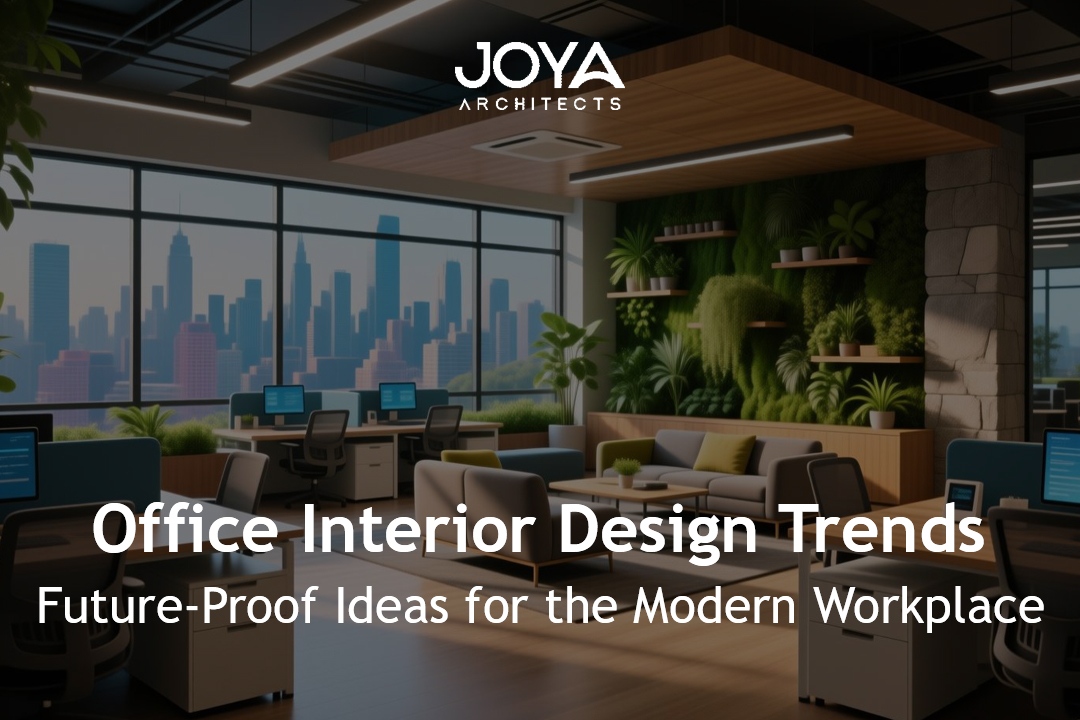
The office is no longer just a place to work, it’s a destination, a strategic asset designed to attract and retain top talent. The fundamental shift in work culture has permanently changed employee expectations, making the physical workspace a critical component of company culture and brand identity. Many companies now face the challenge of making their office a compelling reason for employees to commute, as an outdated or uninspired design can actively hinder collaboration, well-being, and productivity.
This guide goes beyond a simple list of popular ideas. We will provide a strategic look at the 8 key office interior design trends for 2026, complete with practical advice and the tangible business benefits behind each. At JOYA Architects, we believe thoughtful design is an investment in your people and your future. Let’s explore how to create an inspiring and future-proof workplace that endures.
The most significant shift in modern workplace design is the move towards spaces that actively support the holistic health of employees. This is the core of human-centric design.
Human-centric design is an approach that prioritises the physical, mental, and emotional needs of the people using a space. It moves beyond pure aesthetics or density metrics to create environments where employees can thrive. It acknowledges that a healthy, happy workforce is a productive one.

To combat workplace stress, dedicated zones for rest and rejuvenation are becoming standard. These are not just perks, they are essential infrastructure for mental health. This includes:
Investing in a human-centric office yields significant returns. By creating spaces that reduce stress and prevent burnout, companies see a direct impact on their bottom line. A workplace designed for wellbeing leads to:
How to get started: Begin by surveying your team to understand their biggest pain points. A simple audit of natural light access and acoustic comfort can reveal immediate opportunities for improvement.
The hybrid model is here to stay, and the office must evolve to support it. Rigidity is out, extreme flexibility is in. This means creating a workspace that can adapt to changing team sizes, diverse tasks, and fluctuating occupancy rates.
Activity-Based Working is a design philosophy that empowers employees to choose the best environment for their specific task. Instead of assigning one desk to one person, ABW provides a diverse ecosystem of spaces. An employee might start their day in a social lounge for coffee, move to a focus pod for deep work, join a team in a collaborative huddle room, and take a client call in a private booth.
Achieving this level of agility requires the right physical components:
A successful flexible office is a collection of thoughtfully designed zones. This creates a vibrant, multi-functional landscape that caters to all work styles.

The biggest risk of a hybrid office is the “empty office” phenomenon, where the space feels desolate and lacks energy. To prevent this, design must be paired with smart technology. Desk booking systems and room scheduling software help manage space efficiently. Furthermore, data-driven space management, using sensors to track which zones are most popular, allows for continuous optimisation of the layout based on real-world usage.
Technology is no longer an add-on, it is the central nervous system of the modern office. Integration must be seamless, intuitive, and aimed at removing friction from the workday, especially for hybrid teams.
Smart office technology is becoming the expected standard. This includes:
For hybrid work to succeed, the experience must be equitable for all, whether they are in the room or joining remotely. This demands investment in:
The true power of a smart office lies in data. By implementing IoT (Internet of Things) sensors in desks, chairs, and meeting rooms, companies can gather anonymous data on space utilisation. This intelligence is invaluable for:
How to get started: Begin with a single, high-impact area like meeting room management. Implementing a user-friendly booking system can solve a major daily frustration and demonstrate the value of smart office tech.
Sustainability has evolved from a “nice-to-have” feature to a core business imperative. The office interior design trends for 2026 reflect a deeper commitment to environmental responsibility that is visible, authentic, and impactful.
The focus is on creating healthy, low-impact environments through conscious material selection. This involves prioritising:
There is a growing appreciation for materials and furniture that tell a story. This “craft revival” emphasises:
Sustainable design is inherently efficient design. This is a non-negotiable aspect of future-proofing a building. Key elements include:
A green office is a smart office. The benefits extend far beyond environmental impact:
After years of minimalist and neutral palettes, office design is embracing a more expressive, personality-driven aesthetic. The goal is to create memorable, inspiring spaces that strengthen brand identity and energise employees.
Expect to see a move towards rich, sophisticated, and earthy tones. The palette is warm, grounding, and luxurious.
The ceiling is no longer an afterthought. Designing the “fifth wall” is a key trend for adding texture, depth, and acoustic performance.
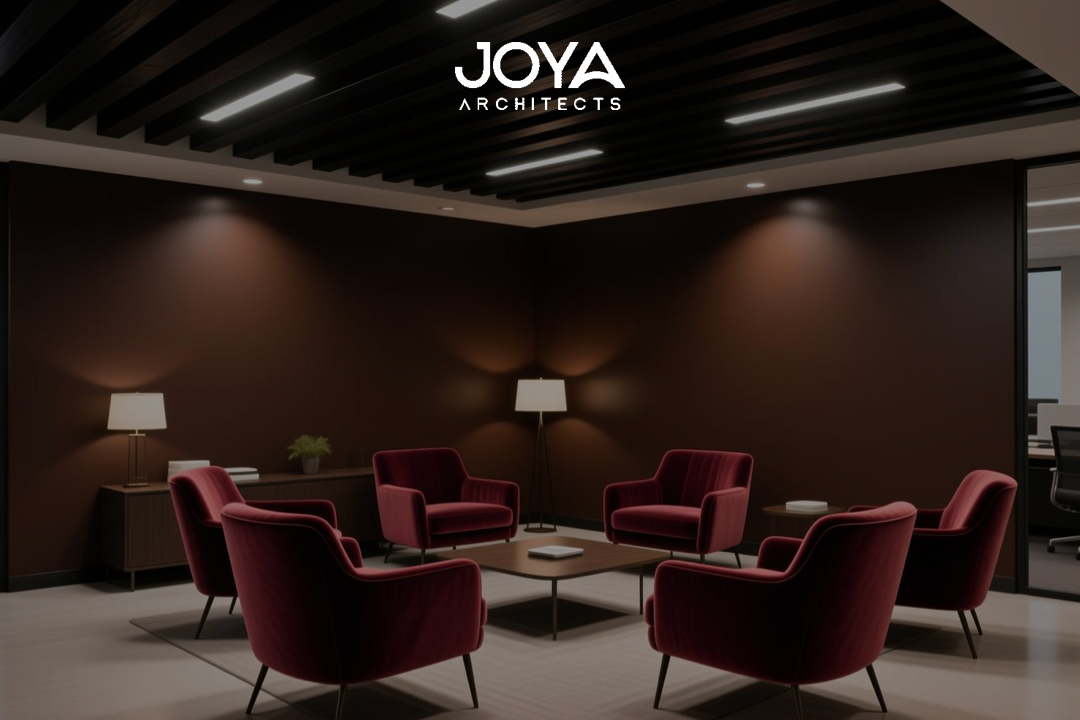
“Resimercial” design strategically blends the comfort, warmth, and sophistication of residential interiors with the durability and functionality of a commercial space. This approach, which aligns deeply with our expertise at JOYA Architects, makes the office feel more like a home-away-from-home, with plush seating, warm lighting, and curated decorative elements.
Consider a tech firm in Singapore that wanted to foster both focused work and dynamic collaboration. They used a bold colour-zoning strategy. The main open-plan area was kept neutral, but individual focus pods were painted a deep forest green to signal a quiet, calming environment. In contrast, the brainstorming and social hubs were defined by vibrant terracotta accent walls and colourful modular seating, creating a palpable sense of energy and community.
A truly inclusive workplace is one that supports every employee, accommodating a wide spectrum of physical, sensory, and cognitive needs. Design is moving beyond basic accessibility requirements to embrace neuro-inclusive principles.
This means thinking about the diverse ways in which people experience a physical environment. It’s about creating a space where everyone can feel comfortable and perform at their best, whether they are neurotypical or neurodivergent.
For individuals who are sensitive to sensory input, a typical open office can be overwhelming. A neuro-inclusive design provides choice and control over one’s environment.
Inclusivity is demonstrated through tangible design choices:
To make the commute worthwhile, the office must offer an experience that employees cannot get at home. This means integrating elements of hospitality and providing amenities that add real value to their day.
The modern workplace is becoming a hub for community, learning, and socializing. It’s a place where company culture comes to life. The design should facilitate these interactions, creating a “destination” that draws people in.
The focus is shifting from gimmicky perks to amenities that genuinely support work-life balance and well-being.
The most successful amenities are those that reflect the company’s culture and what its employees actually want. Before investing in a high-end coffee machine or a ping-pong table, survey your team. Understanding their preferences ensures that your investment in amenities will deliver a strong return in employee satisfaction and engagement.
While the above trends will define the immediate future, design is always evolving. Here’s a glimpse of what’s on the horizon.
The future of office design is clear: it must be flexible, human-centric, sustainable, and technologically enabled. The focus has shifted from creating a mere physical space to curating an employee experience. This is a strategic investment that pays dividends in productivity, innovation, and talent retention.
However, the most successful and enduring office designs are not about chasing every trend. They are about strategically selecting the ideas that best support your company’s unique culture, brand, and long-term business objectives. Thoughtful architecture and design are about creating spaces that are not just built to stand, but to endure and inspire.
Ready to transform your workspace into a future-proof asset that inspires your team? Contact our design experts at JOYA Architects today for a personalized consultation on WhatsApp +6591920393.