



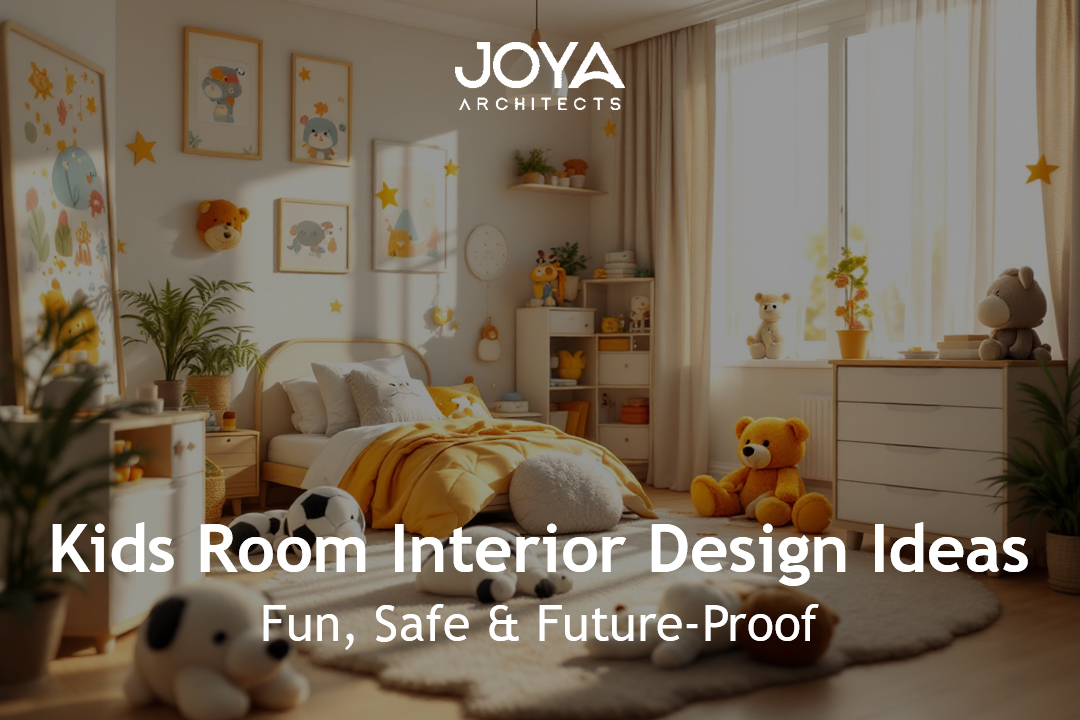
Great kids room interior design ideas create a space that is more than just a place to sleep, they craft a personal sanctuary that fuels imagination, supports development, and provides comfort. A child’s room is a canvas for their evolving personality, a safe haven for rest, and a dynamic space for growth. The true architectural challenge lies in designing a room they adore today that won’t feel outdated tomorrow. Moving beyond fleeting character themes, this guide provides a complete framework for creating a fun, functional, and safe bedroom. At JOYA Architects, we believe in designing spaces that endure.
This principle is especially vital for a child’s room, which must seamlessly evolve from toddlerhood to the teen years. Here, we cover everything from foundational safety to clever, future-proof design strategies that honour your home’s refined aesthetic while celebrating your child’s unique spirit.
Before diving into colours and themes, creating a safe environment is non-negotiable. As architects and designers, we see safety as the invisible framework that supports all beautiful design. It provides peace of mind and allows your child to explore their space with freedom and confidence.
Children are natural climbers. Bookcases, dressers, and wardrobes can pose a serious tipping hazard if not properly secured. Anchoring these items is a critical step in childproofing.
Actionable Tip: Always use the anti-tip kits provided with new furniture. For existing pieces, purchase anchoring kits from a hardware store. Use a stud finder to locate a solid point in the wall, ensuring the connection is strong and secure.Indoor air quality is crucial for a child’s developing respiratory system. Paints, furniture finishes, and even flooring can release harmful volatile organic compounds (VOCs). Opting for non-toxic materials is a key part of thoughtful, health-conscious design.
Actionable Tip: Look for furniture and paints with Greenguard Gold Certification. This ensures products have met rigorous third-party standards for low chemical emissions, contributing to a healthier indoor environment.Curiosity can lead little hands to dangerous places. Outlets and cords for lamps or monitors need careful management. Similarly, windows and their coverings can present risks.
Actionable Tip: Install tamper-resistant outlets. For window treatments, choose cordless blinds or shades to eliminate strangulation hazards. Position beds and cribs away from windows to prevent falls and access to cords.The floor is a primary play surface. The ideal flooring should be durable, comfortable, easy to clean, and non-slip.
Actionable Tip: Low-pile wool carpet is a great natural, durable, and soft option. For hard surfaces like wood or vinyl, add a large, non-slip area rug to define the play space and provide cushioning. A thick rug is easier to clean or replace than wall-to-wall carpeting.Sharp corners on tables, bed frames, and shelves can lead to bumps and injuries, especially for toddlers learning to walk. Selecting furniture with soft, rounded contours is a simple yet effective safety measure.
Actionable Tip: If you have existing furniture with sharp corners, apply clear silicone corner guards. They are unobtrusive and can be removed later as your child grows.Thoughtful design anticipates the future. Avoid the cycle of constant redecorating by building a timeless foundation. This approach, central to our ethos at JOYA Architects, not only saves money but also allows the room to adapt to your child’s changing personality and needs with grace.
A neutral foundation does not mean boring, it means versatile. It creates a calm, serene backdrop that can be easily layered with personality.
Investing in high-quality, multifunctional furniture is the cornerstone of a future-proof room. These pieces are designed to evolve with your child from one stage to the next.
Instead of committing to a singular, rigid theme (like cars or princesses), think of your child’s interests as the top “layer” of the design. This layer is expressed through easily changeable items.
A well-organized room supports the many activities that happen within it. As architects, we approach room layout with a focus on flow and function. Use rugs, furniture placement, or subtle colour shifts to define distinct zones for sleep, study, and play.
A child’s most important activity is rest. This zone should be calm, comfortable, and optimized for restorative sleep.
As your child starts school, a dedicated workspace becomes essential. This zone should be organized, well-lit, and free from the distractions of the play area.
This is the area for creativity, games, and imaginative play. It should feel open and inviting.
A dedicated reading nook makes books feel like a special treat. It should be the coziest corner in the room.
Effective storage is the secret to a functional and serene kids’ room. The goal is to make it intuitive for children to participate in cleanup, turning tidying into a simple habit rather than a daily battle.
In any room, but especially smaller ones, vertical space is valuable real estate. Drawing the eye upward also creates an illusion of height and spaciousness.
In a child’s room, every piece of furniture should work hard. Look for smart designs that integrate storage seamlessly.
The key to getting kids to clean up is making it fast and simple. Open, accessible storage is far more effective than complex systems.
This is where the room truly becomes your child’s own. Involving them in the design process gives them a sense of ownership and pride in their space. At JOYA Architects, we guide this collaboration to ensure the final result is both personal and polished.
Colour has a profound impact on mood and energy levels. A balanced palette can help create the right atmosphere for both active play and quiet rest.
Collaboration ensures your child loves the final result. The key is to present them with curated choices that align with your overall design vision.
Personal, handmade touches make a space feel unique and loved. These projects can also be wonderful bonding experiences.
Not all rooms are a perfect square, and many families face the challenges of limited square footage or shared spaces. Here’s how to apply thoughtful architectural principles to tackle these common design challenges with style and function.
Designing a small kids’ room is an exercise in smart editing and maximizing every centimetre. The goal is to create a space that feels open, organized, and functional, not cramped. With over 300 words of dedicated strategies, here is our approach.
A common mistake is filling a small room with scaled-down furniture. Instead, focus on fewer, harder-working pieces. A loft bed is the single most impactful choice for a small room. It elevates the sleeping area, liberating the floor space below for a desk, a small sofa, or an open play zone. Look for models that integrate a desk, shelving, or even a small wardrobe. This consolidates major furniture needs into one vertical footprint.
Vertical storage is your next critical tool. Use the full height of the walls.
Colour and light play a huge role in the perception of space.
Finally, declutter ruthlessly. Implement a toy rotation system, storing out-of-season items elsewhere. Choose furniture with clean lines and a lighter visual weight—pieces with legs, for example, feel less bulky than solid-to-the-floor designs.
A shared bedroom presents the unique challenge of balancing communal space with individual identity. For siblings, this room must be a sanctuary for both. Success hinges on creating clear personal zones and smart, equitable storage solutions. This requires more than just two beds, it demands thoughtful spatial planning.
The most effective starting point is creating distinct zones for each child. Even if it’s just a visual division, this helps establish a sense of personal territory.
Bunk beds are the classic space-saver, but consider modern variations. L-shaped configurations can create a more open feel and give each child a corner to call their own. Some bunk beds come with a larger bed on the bottom, which is ideal for siblings with an age gap.
Storage must be carefully considered to prevent clutter and conflict.
Involve both children in the process. Allowing them to choose their own bedding, a piece of art, or the colour of their desk chair fosters a sense of ownership and respect for the shared environment. Establish ground rules for keeping personal items in their designated zones to maintain harmony.
Creating the perfect kid’s room is a journey, not a destination. It’s an act of thoughtful design that balances immediate joy with long-term adaptability. As we’ve explored, the most successful kids room interior design ideas are rooted in a foundation of safety, future-proof furniture, smart zoning, and accessible storage. By focusing on these core principles, you can design a space that not only looks fantastic but also actively supports your child’s development, creativity, and well-being. At JOYA Architects, we believe this adaptable environment—one that is ready to grow and change alongside your child—will become a cherished part of your home’s story for years to come.
Ready to create a thoughtful, enduring space for your child that seamlessly integrates with the beauty of your home? Let our expertise in lifestyle-driven design guide you. Contact JOYA Architects for a complimentary design consultation. WhatsApp us at +65 9192 0393 to begin crafting a room that’s ready for every chapter.

© 2025 Joya Architects Pre Ltd.


